


Best Email Marketing Strategies for E-commerce Stores to Increase Sales
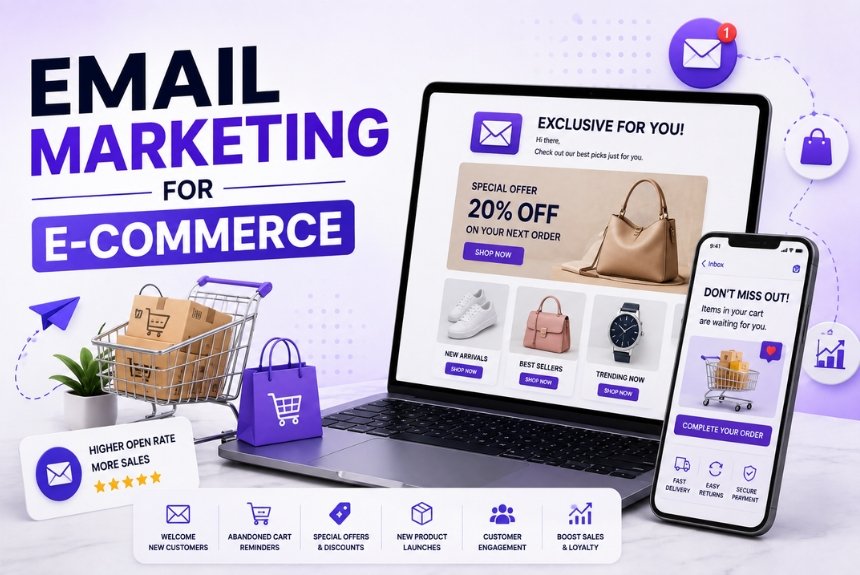
The ecommerce industry has become highly competitive, with businesses constantly searching for effective ways to attract customers, increase sales, and build long-term relationships.
While paid advertisements and social media marketing help businesses reach new audiences, email marketing remains one of the most powerful strategies for converting visitors into customers and encouraging repeat purchases.
Email marketing for ecommerce allows online stores to communicate directly with customers through personalized messages, product updates, special offers, and automated campaigns.
Unlike other marketing channels where businesses depend on algorithms and advertising costs, email marketing gives brands direct access to their customers’ inboxes.
However, simply sending promotional emails is not enough. Successful ecommerce businesses use strategic email campaigns that guide customers throughout their buying journey.
From welcoming new subscribers to recovering abandoned carts and recommending relevant products, email marketing helps businesses increase conversions and customer loyalty.
In this guide, we will explore the best email marketing strategies for ecommerce stores, including automated campaigns, promotional emails, customer retention strategies, and optimization techniques.
Why Email Marketing Is Important for Ecommerce Stores
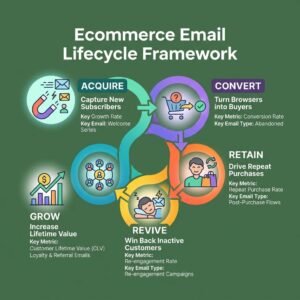
Email marketing plays an important role in ecommerce growth because it helps businesses communicate with customers at different stages of the buying journey.
Whether a customer is discovering a brand for the first time, considering a purchase, or returning for another order, email marketing helps maintain continuous communication.
1. Increases Customer Engagement
Customers receive hundreds of marketing messages every day. Personalized email campaigns help ecommerce brands stand out by delivering relevant content directly to users.
Examples include:
- New product announcements
- Personalized offers
- Shopping recommendations
- Educational content
Relevant emails encourage customers to interact with the brand.
2. Drives More Sales
One of the biggest advantages of email marketing for ecommerce is its ability to generate conversions.
Businesses can use emails to:
- Promote products
- Share discounts
- Recover abandoned carts
- Encourage repeat purchases
Customers who receive timely and relevant emails are more likely to complete purchases.
3. Improves Customer Retention
Acquiring new customers can be expensive. Email marketing helps ecommerce stores increase customer lifetime value by encouraging repeat purchases.
Retention emails can include:
- Loyalty rewards
- Product updates
- Special customer offers
- Thank-you messages
4. Provides Personalization Opportunities
Ecommerce stores collect valuable customer information such as:
- Purchase history
- Browsing behavior
- Product preferences
This data allows businesses to send personalized emails.
Examples:
“Products similar to your recent purchase”
“Recommended items based on your interests”
Personalization improves customer experience and increases conversions.
5. Cost-Effective Marketing Channel
Compared to paid advertising, email marketing is affordable and provides long-term value.
Once businesses build an email list, they can continue communicating with customers without paying for every interaction.
Email Marketing vs Other Ecommerce Marketing Channels
| Marketing Channel | Main Benefit | Limitation |
| Email Marketing | Direct customer communication | Requires subscriber list |
| Social Media | Brand awareness | Depends on algorithms |
| Paid Ads | Quick traffic generation | Requires continuous budget |
| SEO | Long-term visibility | Takes time to grow |
Email marketing works best when combined with other ecommerce strategies.
Key Email Marketing Campaigns Every Ecommerce Store Needs
Successful ecommerce brands use different email campaigns based on customer behavior and business goals.
The most effective campaigns include:
- Welcome Emails
- Cart Abandonment Emails
- Product Recommendation Emails
- Promotional Campaigns
- Customer Retention Emails
- Analytics and Optimization
1. Welcome Emails
Welcome emails are the first communication between an ecommerce brand and a new subscriber.
They are sent after someone:
- Creates an account
- Subscribes to a newsletter
- Downloads a resource
- Signs up for offers
A welcome email creates the first impression of your brand.
Why Welcome Emails Matter
Welcome emails are important because new subscribers are already interested in your business.
They help:
- Build trust
- Introduce your brand
- Encourage first purchases
- Increase engagement
A well-designed welcome email can turn new subscribers into customers.
Elements of an Effective Welcome Email
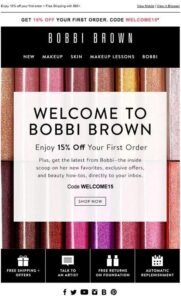
1. Thank the Subscriber
Start by appreciating customers for joining your community.
Example:
“Thanks for becoming part of our community.”
2. Introduce Your Brand
Explain:
- Who you are
- What you offer
- Why customers should choose you
3. Provide an Incentive
Many ecommerce brands offer:
- Discount codes
- Free shipping
- Exclusive deals
Example:
“Enjoy 15% off your first order.”
4. Include a Clear CTA
The email should guide customers toward the next action.
Examples:
- Shop Now
- Explore Products
- Start Shopping
Welcome Emails
Types of Welcome Email Series
Many successful ecommerce stores use a series of welcome emails instead of sending only one message.
A welcome email sequence may include:
Email 1: Introduction Email
Purpose:
- Welcome new subscribers
- Introduce the brand
- Share the brand story
Email 2: Product Discovery Email
Purpose:
- Highlight popular products
- Explain product benefits
- Guide customers toward browsing
Email 3: First Purchase Incentive
Purpose:
- Encourage new customers to complete their first order
- Offer a discount or special benefit
Best Practices for Welcome Emails
To create effective welcome emails:
✔ Send the first email immediately after signup
✔ Keep the message simple and clear
✔ Use brand-friendly visuals
✔ Provide value before selling
✔ Include a strong CTA
✔ Personalize the message whenever possible
A strong welcome email builds trust and creates a positive customer experience.
2. Cart Abandonment Emails
Cart abandonment is one of the biggest challenges faced by ecommerce stores.
Many customers add products to their shopping cart but leave the website without completing the purchase.
Cart abandonment emails help businesses recover these lost sales by reminding customers about products they were interested in.
Why Customers Abandon Shopping Carts
Customers may leave their carts because of:
- Unexpected shipping costs
- Complicated checkout process
- Lack of payment options
- Comparing prices with competitors
- Distractions
- Need for more time before purchasing
Cart abandonment does not always mean customers are not interested. Sometimes they simply need a reminder.
How Cart Abandonment Emails Work
A typical cart recovery sequence includes multiple emails.
Email 1: Reminder Email
Sent shortly after abandonment.
Purpose:
- Remind customers about their selected products
- Encourage them to return
Example:
“Your items are waiting for you.”
Email 2: Benefit-Focused Email
This email highlights product value.
It can include:
- Product benefits
- Customer reviews
- Reasons to complete the purchase
Email 3: Incentive Email
If customers still do not purchase, businesses may offer:
- Discount codes
- Free shipping
- Limited-time offers
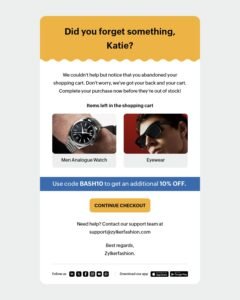
Example:
“Complete your order today and get 10% off.”
Best Practices for Cart Abandonment Emails
1. Send Emails at the Right Time
Timing is important.
Common strategies:
- First reminder: Within a few hours
- Second reminder: After one day
- Final reminder: Within a few days
2. Include Product Images
Showing the abandoned products reminds customers about their interest.
Visual reminders make emails more effective.
3. Create Urgency
Urgency can encourage customers to complete purchases.
Examples:
- Limited stock available
- Offer ending soon
- Items selling quickly
4. Make Checkout Easy
Include a direct link that takes customers back to their cart.
Reducing extra steps improves conversion chances.
Benefits of Cart Abandonment Emails
Cart recovery emails help ecommerce stores:
- Recover lost revenue
- Increase conversion rates
- Improve customer experience
- Understand buying behavior
They are one of the highest-value automated email campaigns for online stores.
3. Product Recommendation Emails
Product recommendation emails are personalized messages that suggest products based on customer interests, browsing behavior, or previous purchases.
These emails help ecommerce stores increase sales by showing customers products they are more likely to buy.
Why Product Recommendation Emails Work
Customers often need guidance when shopping online.
A large product catalog can make decision-making difficult.
Personalized recommendations simplify the buying process by showing relevant products.
Examples of Product Recommendation Emails
1. Based on Previous Purchases
Example:
A customer purchases a laptop.
Recommended email:
- Laptop accessories
- Laptop bags
- External devices
2. Based on Browsing Behavior
If a customer views a product but does not purchase, businesses can send related recommendations.
Example:
“You may also like these products.”
3. Similar Product Recommendations
Businesses can suggest alternatives or related products.
Examples:
- Similar styles
- Higher-quality options
- Complementary products
Types of Product Recommendation Emails
1. Frequently Bought Together Emails
These suggest products that customers often purchase together.
Example:
A customer buys a camera → Recommend a memory card or camera bag.
2. Recently Viewed Product Emails
These remind customers about products they previously explored.
3. New Product Recommendation Emails
These inform customers about new arrivals based on their interests.
Promotional Campaigns
Promotional emails are one of the most common email marketing strategies for ecommerce stores. These campaigns help businesses inform customers about discounts, special offers, new products, and seasonal sales.
However, successful promotional emails are not only about announcing discounts. They should create excitement, provide value, and encourage customers to take action.
Why Promotional Emails Are Important
Promotional campaigns help ecommerce businesses:
- Increase sales during campaigns
- Promote new products
- Clear old inventory
- Encourage repeat purchases
- Create urgency among customers
When planned properly, promotional emails can generate significant revenue.
Types of Ecommerce Promotional Emails
1. Discount Emails
Discount emails encourage customers to purchase by offering special savings.
Examples:
- Percentage discounts
- Fixed amount discounts
- Free shipping offers
- Bundle deals
Example:
“Get 20% off your next purchase.”
2. Seasonal Sale Emails
Seasonal campaigns are effective because customers are already interested in shopping during certain periods.
Examples:
- Holiday sales
- Festival offers
- End-of-season sales
- Anniversary offers
These campaigns create excitement and urgency.
3. New Product Launch Emails
New product emails introduce customers to new arrivals.
A good launch email includes:
- Product images
- Benefits
- Features
- Customer value
- Purchase CTA
4. Limited-Time Offer Emails
These emails encourage immediate action by creating urgency.
Examples:
- Sale ends tonight
- Limited stock available
- Offer expires soon
Urgency can improve conversions when used honestly.
Elements of a Successful Promotional Email
1. Attractive Subject Line
The subject line should immediately communicate value.
Examples:
❌ “New Update”
✅ “Exclusive 30% Discount Just for You”
2. Clear Offer
Customers should quickly understand:
- What is being offered
- How much they can save
- When the offer ends
3. Strong Visuals
Product images help customers understand the offer and increase interest.
4. Clear CTA
Every promotional email should include a simple action.
Examples:
- Shop Now
- Claim Offer
- Explore Collection
Common Promotional Email Mistakes
Avoid:
❌ Sending too many sales emails
❌ Using misleading offers
❌ Creating unclear messages
❌ Ignoring customer preferences
❌ Not optimizing for mobile users
Too many promotional emails can reduce customer trust.
5. Customer Retention Emails
Attracting new customers is important, but retaining existing customers is equally valuable.
Customer retention emails help ecommerce businesses maintain relationships and encourage repeat purchases.
A customer who already purchased from your store is more likely to buy again compared to a completely new visitor.
Why Customer Retention Emails Matter
Retention emails help businesses:
- Increase customer lifetime value
- Build loyalty
- Encourage repeat purchases
- Strengthen brand relationships
Long-term customer relationships create sustainable ecommerce growth.
Types of Customer Retention Emails
1. Thank You Emails
A thank-you email shows appreciation after a purchase.
It can include:
- Appreciation message
- Product usage tips
- Related recommendations
Example:
“Thank you for choosing our brand.”
2. Loyalty Program Emails
Loyalty emails encourage customers to continue shopping.
Examples:
- Reward points
- Exclusive member discounts
- Early access offers
3. Re-engagement Emails
These emails target inactive customers who have not purchased recently.
Example:
“We miss you! Here is a special offer.”
4. Review Request Emails
Customer reviews build trust and influence future buyers.
Businesses can request:
- Product reviews
- Ratings
- Customer feedback
Best Practices for Customer Retention Emails
1. Personalize Customer Communication
Use customer information such as:
- Previous purchases
- Preferences
- Shopping history
Personalized retention emails feel more valuable.
2. Provide Exclusive Benefits
Reward loyal customers with:
- Special discounts
- Early access
- Personalized offers
3. Maintain Regular Communication
Businesses should stay connected without overwhelming customers.
The goal is to remain memorable and valuable.
6. Analytics & Optimization
Successful ecommerce email marketing requires continuous monitoring and improvement.
Sending emails without analyzing results can prevent businesses from understanding what works and what needs improvement.
Analytics help ecommerce stores make data-driven decisions.
Important Email Marketing Metrics for Ecommerce
1. Open Rate
Open rate shows how many subscribers opened an email.
A low open rate may indicate:
- Weak subject lines
- Poor timing
- Low audience interest
2. Click-Through Rate (CTR)
CTR measures how many users clicked links inside emails.
It helps evaluate:
- Email content quality
- CTA effectiveness
- Product interest
3. Conversion Rate
Conversion rate measures how many users completed the desired action.
Examples:
- Purchase completion
- Product registration
- Subscription
4. Revenue Per Email
This metric shows how much revenue each email generates.
It helps businesses understand the financial impact of campaigns.
5. Unsubscribe Rate
A high unsubscribe rate may indicate:
- Too many emails
- Irrelevant content
- Poor targeting
Analytics & Optimization (Continued)
Tracking email performance is only the first step. Ecommerce businesses must continuously optimize their campaigns to improve results.
Optimization helps identify what customers respond to and how businesses can create better email experiences.
Key Email Marketing Optimization Strategies
1. A/B Testing
A/B testing involves comparing two versions of an email to determine which performs better.
Businesses can test:
- Subject lines
- Email designs
- CTA buttons
- Images
- Offers
- Sending times
Example:
Version A: “Get 20% Off Your First Order”
Version B: “Your Exclusive Discount Is Waiting”
The better-performing version can be used for future campaigns.
2. Improve Email Personalization
Personalization should go beyond using a customer’s name.
Ecommerce stores can personalize emails using:
- Purchase history
- Product interests
- Browsing behavior
- Customer preferences
Personalized emails improve engagement and increase the chances of conversion.
3. Optimize Email Timing
The timing of an email can affect customer engagement.
Businesses should analyze:
- When customers open emails
- When they click links
- When purchases happen
Testing different schedules helps identify the best sending time.
4. Improve Mobile Experience
Many customers view emails on smartphones.
Businesses should ensure emails include:
- Responsive designs
- Easy-to-read text
- Mobile-friendly buttons
- Fast-loading images
A poor mobile experience can reduce sales opportunities.
Email Marketing Automation for Ecommerce
Automation allows businesses to send timely emails based on customer actions.
Instead of manually sending every email, businesses can create automated workflows.
Examples of Ecommerce Email Automation
Welcome Automation
Triggered when a customer subscribes.
Goal:
- Introduce the brand
- Build trust
- Encourage first purchase
Cart Abandonment Automation
Triggered when customers leave items in their cart.
Goal:
- Remind customers
- Recover lost sales
Post-Purchase Automation
Triggered after a customer completes an order.
Includes:
- Order confirmation
- Product tips
- Review requests
- Related product suggestions
Re-engagement Automation
Triggered when customers become inactive.
Goal:
- Bring customers back
- Encourage repeat purchases
Common Email Marketing Mistakes Ecommerce Stores Should Avoid
Even effective strategies can fail if businesses make common mistakes.
Avoid:
1. Sending Too Many Promotional Emails
Customers may lose interest if every email is only focused on selling.
Balance promotional emails with:
- Helpful content
- Product education
- Customer stories
2. Ignoring Customer Segmentation
Sending the same email to every customer reduces relevance.
Segment customers based on:
- Purchase history
- Interests
- Engagement level
3. Not Optimizing Emails for Mobile
Mobile users should have the same experience as desktop users.
4. Poor Email Design
Avoid:
- Too much text
- Confusing layouts
- Weak visuals
- Unclear CTAs
Frequently Asked Questions
1. Why is email marketing important for ecommerce stores?
Email marketing helps ecommerce businesses increase sales, build customer relationships, recover abandoned carts, and encourage repeat purchases through personalized communication.
2. What are the best email campaigns for ecommerce?
The most effective ecommerce email campaigns include:
- Welcome emails
- Cart abandonment emails
- Product recommendation emails
- Promotional campaigns
- Customer retention emails
3. How often should ecommerce stores send emails?
The ideal frequency depends on customer expectations and business goals. Stores should focus on sending valuable emails consistently rather than sending too many messages.
4. Can email marketing increase ecommerce sales?
Yes. Email marketing can increase sales by promoting products, recovering abandoned carts, and encouraging repeat purchases from existing customers.
5. What is the role of automation in ecommerce email marketing?
Automation helps businesses send timely and personalized emails based on customer actions, improving efficiency and increasing conversions.
Final Checklist for Ecommerce Email Marketing Success
Before launching an email campaign, make sure you:
✔ Build a quality subscriber list
✔ Create a strong welcome email series
✔ Set up cart abandonment emails
✔ Send personalized product recommendations
✔ Plan promotional campaigns carefully
✔ Create customer retention emails
✔ Segment your audience
✔ Optimize emails for mobile devices
✔ Track important performance metrics
✔ Test and improve campaigns regularly
Final Recommendation
Email marketing is one of the most effective strategies for ecommerce stores because it allows businesses to communicate directly with customers and create personalized shopping experiences.
From welcoming new subscribers to recovering abandoned carts and encouraging repeat purchases, strategic email campaigns can significantly improve revenue and customer loyalty.
The most successful ecommerce brands do not rely on random promotional emails. They use data, automation, personalization, and customer insights to deliver the right message at the right time.
By implementing these email marketing strategies for ecommerce, businesses can increase conversions, strengthen customer relationships, and achieve long-term growth.
Implement these ecommerce email marketing strategies today and unlock the full potential of your online store.
Leave a Reply