


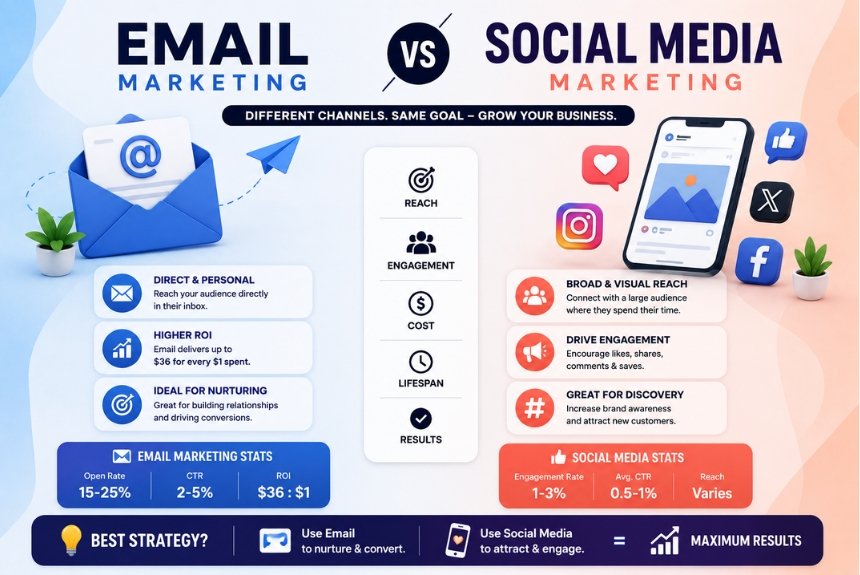
Email Marketing vs Social Media Marketing: Which Strategy Is Better for Your Business?
Digital marketing has transformed the way businesses connect with customers. Today, companies use multiple online channels to attract audiences, build relationships, and increase sales. Among the most popular strategies are email marketing and social media marketing.
Both channels are powerful, but they work differently.
Email marketing allows businesses to communicate directly with subscribers through personalized messages, newsletters, promotions, and customer updates. On the other hand, social media marketing helps brands reach wider audiences, build communities, and increase visibility through platforms where people spend their time.
Many businesses struggle to decide where they should invest their marketing efforts. Should they focus more on building an email list or growing their social media presence? Which channel provides better ROI? Which one creates stronger customer relationships?
The answer depends on business goals, audience behavior, and marketing strategy.
Email marketing focuses on direct communication and customer retention, while social media marketing focuses on awareness, engagement, and community building.
In this guide, we will compare email marketing vs social media marketing based on important factors such as audience ownership, ROI, engagement, cost, and best use cases to help businesses choose the right approach.
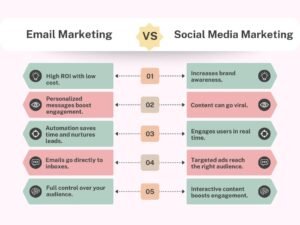
Email Marketing vs Social Media Marketing: Quick Comparison
| Factor | Email Marketing | Social Media Marketing |
| Main Purpose | Direct communication and conversions | Brand awareness and engagement |
| Audience Ownership | Owned audience | Platform-controlled audience |
| Reach | Limited to subscribers | Potentially wider reach |
| Personalization | Highly personalized | Limited personalization |
| Cost | Low-cost | Free and paid options |
| ROI | Usually higher for conversions | Strong for visibility |
| Relationship Building | Strong customer relationships | Community building |
| Content Lifespan | Longer through inbox | Often short-lived |
What Is Email Marketing?
Email marketing is a digital marketing strategy where businesses send emails to customers, leads, or subscribers to promote products, share information, and maintain relationships.
It involves collecting email addresses from interested users and sending targeted messages based on customer needs and behavior.
Businesses use email marketing for:
- Product promotions
- Newsletters
- Customer updates
- Special offers
- Lead nurturing
- Abandoned cart reminders
- Customer retention campaigns
Unlike traditional advertising, email marketing allows businesses to communicate directly with people who have already shown interest in their brand.
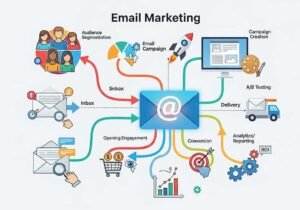
How Email Marketing Works
The email marketing process usually involves several steps:
1. Building an Email List
The first step is collecting email addresses from potential customers.
Businesses can build lists through:
- Website signup forms
- Free resources
- Discounts
- Online purchases
- Events and webinars
A quality email list contains people who are interested in receiving brand communication.
2. Creating Valuable Content
Successful email marketing is not only about selling products.
Businesses create different types of emails, including:
- Educational newsletters
- Product announcements
- Promotional offers
- Industry updates
- Personalized recommendations
The goal is to provide value while encouraging customers to take action.
3. Sending Targeted Campaigns
Email marketing allows businesses to send messages based on customer information.
Examples:
- New subscribers receive welcome emails
- Existing customers receive loyalty offers
- Interested buyers receive product recommendations
This makes communication more relevant.
Types of Email Marketing Campaigns
1. Newsletter Emails
Newsletters help businesses share regular updates, tips, and valuable information with subscribers.
2. Promotional Emails
These emails promote:
- Discounts
- Sales
- New products
- Special offers
3. Automated Emails
Automation allows businesses to send emails automatically based on user actions.
Examples:
- Welcome emails
- Cart abandonment emails
- Birthday emails
4. Transactional Emails
These include:
- Order confirmations
- Payment receipts
- Shipping updates
Advantages of Email Marketing
1. Direct Communication
Email allows businesses to communicate directly with customers without depending on algorithms.
2. High Personalization
Businesses can customize emails based on:
- Customer interests
- Purchase history
- Behavior
3. Strong Conversion Potential
Since subscribers already have interest in the brand, email marketing often generates higher conversion rates.
4. Long-Term Customer Relationships
Regular valuable emails help businesses maintain relationships and encourage repeat purchases.
What Is Social Media Marketing?
Social media marketing is a digital marketing strategy that involves promoting products, services, and brands through social media platforms.
Businesses use social media channels to connect with audiences, increase brand awareness, share content, and encourage customer interaction.
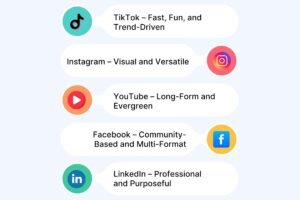
Popular social media marketing platforms include:
- X (Twitter)
- YouTube
- TikTok
Unlike email marketing, which focuses on direct communication with subscribers, social media marketing focuses on reaching and engaging audiences through public content.
How Social Media Marketing Works
1. Creating Social Media Presence
The first step is creating business profiles on relevant platforms.
A strong social media presence includes:
- Professional profile information
- Brand visuals
- Regular content posting
- Audience interaction
Businesses choose platforms based on where their target customers spend the most time.
2. Creating Engaging Content
Social media marketing depends heavily on content quality.
Common content formats include:
- Images
- Videos
- Reels
- Stories
- Polls
- Live sessions
- Educational posts
The goal is to attract attention and encourage users to interact with the brand.
3. Building Community Engagement
Social media allows two-way communication between brands and customers.
Businesses can:
- Reply to comments
- Answer questions
- Collect feedback
- Start conversations
This helps create stronger brand relationships.
Types of Social Media Marketing
1. Organic Social Media Marketing
Organic marketing involves creating and sharing content without paid advertising.
Examples:
- Regular posts
- Educational content
- Community discussions
- Customer interactions
It helps build long-term brand visibility.
2. Paid Social Media Advertising
Paid advertising allows businesses to promote content to specific audiences.
Businesses can target users based on:
- Age
- Location
- Interests
- Online behavior
Examples include:
- Sponsored posts
- Video ads
- Product advertisements
3. Influencer Marketing
Businesses collaborate with influencers to promote products or services to their followers.
This strategy helps brands reach new audiences and build trust.
Advantages of Social Media Marketing
1. Wider Audience Reach
Social media platforms provide access to millions of users worldwide.
Businesses can reach people who may not already know about their brand.
2. Strong Brand Awareness
Regular content sharing helps businesses remain visible and recognizable.
Social media is especially effective for:
- New brands
- Startups
- Businesses launching new products
3. Better Customer Interaction
Social media allows direct conversations with customers.
Brands can build communities through:
- Comments
- Messages
- Discussions
- User-generated content
4. Visual Content Opportunities
Platforms like Instagram and YouTube are highly effective for businesses that depend on visual storytelling.
Examples:
- Fashion brands
- Food businesses
- Travel companies
- Creative agencies
Email Marketing vs Social Media Marketing: Audience Ownership
One of the biggest differences between email marketing and social media marketing is audience ownership.
Understanding this difference is important because it affects long-term marketing success.
What Is Audience Ownership?
Audience ownership refers to whether a business has direct control over its audience or depends on another platform.
Email Marketing: Owned Audience
In email marketing, businesses own their subscriber list.
When customers provide their email addresses, businesses can communicate with them directly.
Benefits include:
- No dependency on platform algorithms
- Direct access to subscribers
- Better customer relationships
- Long-term audience value
For example, if a business has 50,000 email subscribers, it can send messages directly to those people whenever needed.
Social Media Marketing: Platform-Controlled Audience
Social media followers are not completely owned by businesses.
The platform controls:
- Content visibility
- Algorithm changes
- Organic reach
- User distribution
A business may have thousands of followers but reach only a small percentage of them organically.
For example, a brand with 100,000 followers may not have every follower see its posts because social media algorithms decide what appears in users’ feeds.
Audience Ownership Comparison
| Factor | Email Marketing | Social Media Marketing |
| Audience Control | High control | Limited control |
| Dependence | Independent channel | Depends on platform |
| Algorithm Impact | Very low | High |
| Customer Data | Direct access | Limited access |
| Long-Term Value | Strong | Depends on platform changes |
Why Audience Ownership Matters
Building an owned audience provides long-term marketing security.
Social media platforms can change their rules anytime, affecting:
- Reach
- Engagement
- Advertising costs
Email lists provide more stability because businesses have direct communication with subscribers.
However, social media remains valuable for discovering new customers and building brand awareness.
Combining Both Strategies
The most effective digital marketing approach is not choosing only one channel.
Businesses can combine both:
Social Media → Attract New Audiences
Email Marketing → Convert and Retain Customers
Example:
A company promotes a free guide on social media. Interested users sign up with their email address. The business then uses email marketing to nurture those leads and convert them into customers.
ROI Comparison: Email Marketing vs Social Media Marketing
Return on Investment (ROI) is one of the most important factors businesses consider when choosing a marketing channel.
ROI measures how much revenue a business generates compared to the money and resources invested in a marketing activity.
Both email marketing and social media marketing can provide strong returns, but they work differently.
Email Marketing ROI
Email marketing is widely considered one of the highest-performing digital marketing channels because it focuses on an audience that has already shown interest in a brand.
Subscribers have willingly shared their email addresses, making them more likely to engage with business communication.
Reasons Email Marketing Generates Strong ROI
1. Lower Marketing Costs
Email campaigns usually require fewer resources compared to paid advertising.
Businesses mainly invest in:
- Email marketing software
- Content creation
- Campaign management
Once an email list is built, businesses can continue communicating with subscribers without paying for every interaction.
2. Higher Conversion Potential
Email subscribers are often closer to making a purchase because they already have some connection with the brand.
Examples:
- Existing customers
- Newsletter subscribers
- Website visitors
- Product inquiries
This makes email marketing effective for driving sales.
3. Personalization Improves Results
Email allows businesses to send targeted messages based on:
- Customer interests
- Previous purchases
- Website behavior
- Engagement level
Relevant messages often lead to better conversions.
Social Media Marketing ROI
Social media marketing can generate excellent results, especially for brand awareness and audience growth.
However, ROI can vary depending on:
- Platform selection
- Content quality
- Advertising budget
- Target audience
Reasons Social Media Marketing Provides Value
1. Brand Visibility
Social media helps businesses reach new audiences and increase awareness.
A single piece of content can reach thousands or millions of users.
2. Customer Engagement
Social platforms allow businesses to interact directly with customers.
Engagement activities include:
- Comments
- Shares
- Likes
- Direct messages
These interactions help build brand loyalty.
3. Growth Opportunities
Social media is effective for businesses that want to:
- Introduce a new brand
- Build an online community
- Increase followers
- Promote visual content
Email Marketing vs Social Media Marketing: ROI Comparison Table
| Factor | Email Marketing | Social Media Marketing |
| Main Goal | Conversions and retention | Awareness and engagement |
| Cost Efficiency | Very high | Depends on strategy |
| Customer Intent | Higher | Mixed |
| Sales Generation | Strong | Moderate to high |
| Long-Term Value | High | Depends on platform |
Which Has Better ROI?
For direct sales and customer retention, email marketing generally provides stronger ROI.
For brand awareness and reaching new audiences, social media marketing is often more effective.
The best approach is using both channels together:
- Social media attracts new customers.
- Email marketing nurtures and converts them.
Engagement Comparison: Email Marketing vs Social Media Marketing
Engagement refers to how customers interact with marketing content.
Both channels encourage engagement, but the type of engagement is different.
Email Marketing Engagement
Email engagement usually includes:
- Opening emails
- Clicking links
- Downloading resources
- Making purchases
- Replying to messages
Email engagement is often more focused because subscribers have already shown interest in the brand.
Factors That Improve Email Engagement
1. Personalization
Personalized emails create stronger connections with subscribers.
Examples:
- Personalized recommendations
- Customized offers
- Relevant updates
2. Valuable Content
Subscribers engage more when emails provide useful information.
Examples:
- Tips
- Guides
- Educational content
- Exclusive offers
3. Effective Subject Lines
A strong subject line increases the chances of users opening the email.
Social Media Engagement
Social media engagement includes:
- Likes
- Comments
- Shares
- Saves
- Mentions
- Direct messages
Social media encourages public interaction and community participation.
Factors That Improve Social Media Engagement
1. Visual Content
Images and videos often perform better because they capture attention quickly.
2. Consistent Posting
Regular posting helps brands remain visible.
3. Community Interaction
Responding to comments and messages helps build relationships with followers.
Engagement Comparison Table
| Factor | Email Marketing | Social Media Marketing |
| Communication Style | Direct | Public |
| Interaction Type | Personal responses | Community discussions |
| Content Format | Emails and newsletters | Posts, videos, stories |
| Relationship Building | Strong customer connection | Strong community connection |
| Discovery | Limited | High |
Which Channel Creates Better Engagement?
The answer depends on the business goal.
Email marketing is better for:
- Customer retention
- Personalized communication
- Driving purchases
Social media marketing is better for:
- Brand awareness
- Community building
- Reaching new audiences
Using both together creates a stronger customer journey.
Cost Comparison: Email Marketing vs Social Media Marketing
Cost is an important factor when businesses decide where to invest their marketing budget.
Both email marketing and social media marketing can be started with low investment, but their costs depend on business goals, tools, and advertising strategies.
Email Marketing Costs
Email marketing is generally considered a cost-effective marketing channel.
Common expenses include:
- Email marketing software
- Email design tools
- Content creation
- Automation setup
- Campaign management
Many email platforms offer affordable plans based on the number of subscribers.
Benefits of Email Marketing Cost
- Low cost per customer reach
- No payment required for every email sent
- Better control over audience
- Long-term value from subscriber lists
For businesses focused on customer retention and sales, email marketing provides excellent cost efficiency.
Social Media Marketing Costs
Social media marketing can be free or paid depending on the strategy.
Costs may include:
- Content creation
- Graphic design
- Video production
- Social media management
- Paid advertisements
- Influencer partnerships
Organic posting is free, but reaching a large audience often requires paid promotion.
Cost Comparison Table
| Factor | Email Marketing | Social Media Marketing |
| Starting Cost | Low | Low to moderate |
| Paid Advertising Need | Optional | Often required for growth |
| Content Creation Cost | Moderate | Can be high |
| Long-Term Value | High | Depends on platform |
| Customer Acquisition Cost | Usually lower | Can increase with ads |
Which Is More Cost-Effective?
For businesses looking for affordable customer communication and sales generation, email marketing is usually more cost-effective.
For businesses focused on brand awareness and audience growth, social media marketing can provide strong value.
The best strategy depends on business objectives.
Best Use Cases: Email Marketing vs Social Media Marketing
Different marketing channels work better for different goals.
Understanding when to use each strategy helps businesses achieve better results.
Best Use Cases for Email Marketing
1. Customer Retention
Email marketing is highly effective for keeping existing customers engaged.
Businesses can send:
- Loyalty offers
- Product updates
- Personalized recommendations
- Customer appreciation emails
2. Lead Nurturing
Email marketing helps businesses convert potential customers into buyers.
A lead may not purchase immediately, but regular valuable emails can build trust over time.
3. Promotions and Sales
Businesses use emails to announce:
- Discounts
- New products
- Limited-time offers
- Special deals
Because subscribers already know the brand, promotional emails can generate strong results.
4. Building Long-Term Relationships
Email allows businesses to maintain direct communication with customers without depending on external platforms.
Best Use Cases for Social Media Marketing
1. Brand Awareness
Social media is excellent for introducing businesses to new audiences.
Businesses can increase visibility through:
- Content sharing
- Videos
- Stories
- Trending topics
2. Community Building
Social media helps brands create communities around their products and services.
Examples:
- Customer discussions
- User-generated content
- Feedback sessions
3. Product Discovery
Many customers discover new brands through social media platforms.
Visual platforms are especially useful for:
- Fashion
- Food
- Travel
- Lifestyle products
4. Real-Time Communication
Social media allows businesses to quickly respond to:
- Customer questions
- Reviews
- Feedback
This improves customer experience.
Email Marketing vs Social Media Marketing: Which One Should You Choose?
The right choice depends on your business goals.
Choose Email Marketing If You Want:
✔ Higher conversion potential
✔ Direct customer communication
✔ Better customer retention
✔ Personalized campaigns
✔ Long-term audience ownership
Choose Social Media Marketing If You Want:
✔ Brand awareness
✔ More visibility
✔ Community engagement
✔ New audience discovery
✔ Visual content promotion
Frequently Asked Questions (FAQs)
1. Is email marketing better than social media marketing?
Email marketing is better for conversions, customer retention, and personalized communication. Social media marketing is better for awareness, engagement, and reaching new audiences.
2. Which has better ROI: email marketing or social media marketing?
Email marketing usually provides higher ROI for sales and customer retention, while social media provides strong value for brand visibility and audience growth.
3. Can businesses use email marketing and social media together?
Yes. Combining both strategies creates better results. Social media can attract new audiences, while email marketing can nurture those leads and convert them into customers.
4. Is email marketing cheaper than social media marketing?
Email marketing is generally more cost-effective because businesses can communicate directly with subscribers without paying for every interaction.
5. Which marketing strategy is best for small businesses?
Small businesses can benefit from both. Email marketing helps build customer relationships, while social media helps increase brand awareness and reach.
Final Recommendation
Both email marketing and social media marketing are powerful digital marketing strategies, but they serve different purposes.
Email marketing is the better choice for businesses that want direct communication, higher conversions, and stronger customer relationships. It provides better control over the audience and creates long-term value.
Social media marketing is ideal for businesses that want to increase brand awareness, attract new customers, and build an active community.
The most effective approach is not choosing one over the other but combining both strategies.
Use social media to attract and engage potential customers, then use email marketing to nurture relationships and drive conversions.
A balanced strategy that combines email marketing and social media marketing can help businesses increase visibility, improve customer loyalty, and achieve sustainable growth.
Leave a Reply