


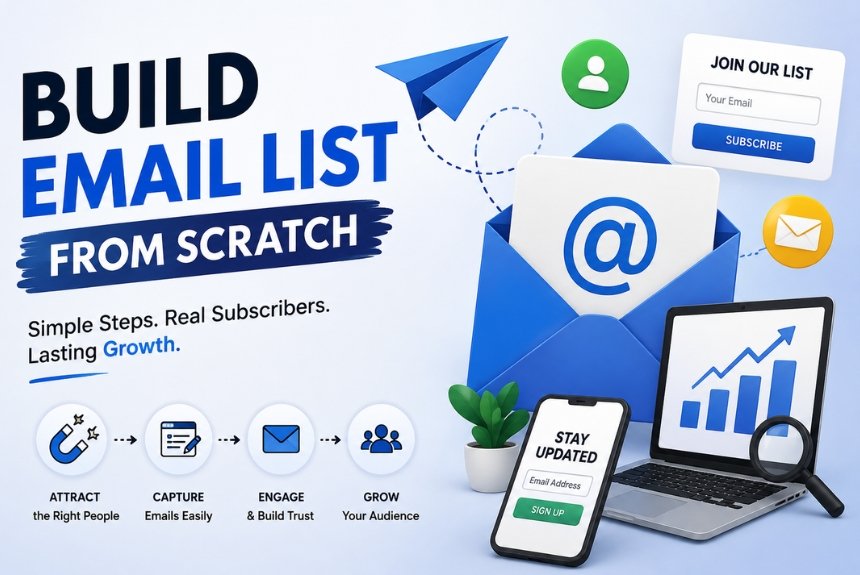
How to Build an Email List from Scratch
Building an email list is one of the smartest long-term investments for any business, blogger, entrepreneur, or content creator. While social media platforms and search engines can help you attract visitors, an email list gives you direct access to your audience without depending on changing algorithms or paid advertising.
Unlike followers on social media, your email subscribers have voluntarily chosen to hear from you. They are interested in your products, services, or content and are more likely to engage with your business. This makes email marketing one of the highest-performing digital marketing channels for lead generation, customer retention, and sales.
Many beginners believe they need thousands of website visitors before starting an email list. In reality, the best time to start is as early as possible. Even if your audience is small today, consistently collecting email addresses allows you to build a valuable marketing asset that grows alongside your business.
However, building an email list is more than simply placing a signup form on your website. Successful list building requires understanding your audience, offering something valuable in exchange for an email address, creating high-converting landing pages, promoting your signup forms across multiple channels, and nurturing subscribers with useful content.
A quality email list is always more valuable than a large but unengaged one. A few hundred subscribers who regularly open your emails and trust your recommendations can generate better results than thousands of inactive contacts. This is why modern email marketing focuses on attracting the right audience rather than simply increasing subscriber numbers.
Whether you run an ecommerce store, service-based business, personal blog, YouTube channel, educational website, or nonprofit organization, learning how to build an email list from scratch can help you strengthen customer relationships, improve conversions, and create sustainable business growth.
In this comprehensive guide, you’ll learn practical strategies for growing your subscriber base ethically and effectively. We’ll cover everything from creating irresistible lead magnets and designing signup forms to using landing pages, social media, and proven email list growth techniques. You’ll also discover common mistakes to avoid and best practices that help build an engaged, high-quality email list.
By the end of this guide, you’ll have a clear roadmap for building an email list that supports your marketing goals and contributes to long-term business success.
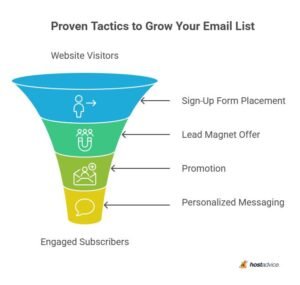
Why Email Lists Matter
An email list is much more than a collection of email addresses. It represents a community of people who have expressed interest in your business and given you permission to communicate with them directly. Because these individuals have already taken the first step by subscribing, they are often more engaged than audiences reached through other marketing channels.
Unlike social media platforms, where your content competes with countless posts and changing algorithms, email provides a direct line of communication. Every campaign reaches subscribers in their inbox, giving your message a greater opportunity to be seen and acted upon.
You Own Your Audience
One of the greatest advantages of email marketing is ownership. Social media accounts can change their algorithms, reduce your organic reach, or even suspend accounts without warning. Search engine rankings can fluctuate due to algorithm updates.
Your email list, however, belongs to you. As long as subscribers have given their permission, you can communicate with them regardless of changes on external platforms. This level of control makes email one of the most dependable marketing channels available.
Higher Engagement
People who subscribe to your email list have already shown interest in your brand. Because they chose to receive your emails, they are generally more likely to:
- Open your emails
- Read your content
- Visit your website
- Download resources
- Register for events
- Purchase products or services
- Recommend your business to others
Consistent communication with engaged subscribers helps strengthen relationships and encourages long-term loyalty.
Better Return on Investment
Email marketing continues to deliver one of the highest returns on investment among digital marketing channels. Once your list has been built, the cost of communicating with subscribers remains relatively low compared to paid advertising.
Instead of paying each time you want to reach potential customers, you can send newsletters, educational content, product updates, and promotional offers directly to people who have already expressed interest in your business.
This makes email marketing particularly attractive for startups and small businesses with limited marketing budgets.
Supports Every Stage of the Customer Journey
Email marketing can be used throughout the customer lifecycle.
Awareness
Introduce your business and educate new subscribers through welcome emails and valuable content.
Consideration
Share case studies, testimonials, comparisons, and educational resources that help potential customers make informed decisions.
Conversion
Promote products, services, discounts, or consultations with compelling calls to action.
Retention
Maintain relationships through newsletters, product updates, exclusive offers, and personalized recommendations.
Loyalty
Reward existing customers with exclusive content, early access to new products, referral programs, and appreciation campaigns.
Using email throughout the customer journey helps businesses create stronger, longer-lasting relationships.
Benefits for Different Types of Businesses
Small Businesses
Email marketing enables small businesses to communicate with customers consistently while keeping marketing costs under control.
Ecommerce Stores
Online retailers can use email campaigns to announce new products, recover abandoned carts, recommend related items, and encourage repeat purchases.
Bloggers
Bloggers use email newsletters to notify readers about new articles, downloadable resources, and exclusive content.
Service Providers
Consultants, agencies, coaches, and freelancers can nurture prospects by sharing valuable insights, success stories, and appointment opportunities.
Educational Organizations
Schools, colleges, and online learning platforms can keep students informed about courses, admissions, events, and educational resources.
Why Quality Matters More Than Quantity
Many beginners focus only on increasing subscriber numbers. While growth is important, subscriber quality has a much greater impact on long-term success.
A quality email list consists of people who:
- Joined voluntarily
- Regularly engage with emails
- Are genuinely interested in your content
- Match your target audience
- Trust your brand
Buying email lists or adding contacts without permission may increase subscriber numbers, but it often results in poor engagement, spam complaints, and reduced email deliverability.
Instead, focus on attracting subscribers who truly value what your business offers.
Key Benefits of Building an Email List
| Benefit | Description |
| Direct Communication | Reach subscribers without relying on social media algorithms. |
| Customer Relationships | Build trust through regular, valuable communication. |
| Increased Website Traffic | Drive visitors to blogs, landing pages, and product pages. |
| Lead Generation | Convert subscribers into potential customers. |
| Higher Sales | Promote products and services directly to interested audiences. |
| Brand Awareness | Keep your business visible through consistent email campaigns. |
| Customer Retention | Encourage repeat purchases and long-term loyalty. |
| Measurable Results | Track opens, clicks, and conversions to improve campaigns. |
Email Lists as Long-Term Business Assets
Unlike paid advertising, which stops generating traffic when your budget ends, an email list continues to provide value for years when managed properly.
Every new subscriber increases your ability to:
- Launch products successfully
- Promote seasonal offers
- Share valuable content
- Conduct surveys
- Collect customer feedback
- Build stronger brand recognition
As your subscriber base grows, so does your ability to communicate with your audience without relying solely on third-party platforms.
Businesses that consistently invest in building and nurturing their email lists often enjoy greater marketing stability, improved customer loyalty, and higher long-term returns.
For this reason, building an email list should be considered a core part of every digital marketing strategy rather than an optional activity.
Lead Magnets Explained
One of the biggest challenges when building an email list is convincing visitors to share their email addresses. Most people are protective of their inboxes and won’t subscribe unless they receive something valuable in return. This is where lead magnets become essential.
A lead magnet is a free resource, benefit, or incentive offered to visitors in exchange for their email address. Instead of simply asking people to “Subscribe to our newsletter,” businesses provide something useful that solves a specific problem.
The more valuable and relevant your lead magnet is, the more likely visitors are to subscribe.
Why Lead Magnets Work
Lead magnets work because they follow the principle of value exchange. Instead of asking for information without offering anything in return, you provide immediate value.
A good lead magnet should:
- Solve a specific problem.
- Deliver immediate value.
- Be easy to consume.
- Match your audience’s interests.
- Naturally connect with your products or services.
For example, if you run a fitness website, offering a free workout guide will generally attract more relevant subscribers than offering a generic ebook.
Types of Lead Magnets
There is no single lead magnet that works for every business. The best choice depends on your audience and industry.
1. eBooks
An eBook is one of the most popular lead magnets because it allows businesses to educate potential customers while demonstrating expertise.
Examples include:
- Beginner’s Marketing Guide
- Social Media Handbook
- Small Business Growth Guide
- Digital Marketing Basics
Well-written eBooks position your business as an authority in your niche.
2. Checklists
Checklists are easy to read and provide immediate value.
Examples include:
- Website Launch Checklist
- SEO Checklist
- Email Marketing Checklist
- Product Launch Checklist
Because checklists are quick to consume, they often achieve high conversion rates.
3. Templates
Templates save users time by providing ready-made documents or designs.
Popular examples include:
- Email templates
- Business proposal templates
- Social media calendar templates
- Resume templates
- Invoice templates
Templates are especially effective for professionals, agencies, and freelancers.
4. Discount Coupons
Ecommerce businesses frequently offer discounts to encourage first-time purchases.
Examples:
- 10% Off Your First Order
- Free Shipping
- Buy One Get One Free
- Exclusive Member Discounts
Subscribers benefit immediately while businesses gain qualified leads.
5. Free Courses
Mini-courses or email courses help educate subscribers over several days.
Topics might include:
- Learn SEO in 7 Days
- Email Marketing Basics
- Photography for Beginners
- Introduction to Graphic Design
Educational lead magnets also create opportunities to introduce paid products later.
6. Webinars
Live webinars allow businesses to demonstrate expertise while interacting directly with potential customers.
Webinars work particularly well for:
- Software companies
- Consultants
- Coaches
- Marketing agencies
- Educational institutions
7. Free Tools
Interactive tools provide practical value and often generate high-quality leads.
Examples include:
- ROI Calculator
- BMI Calculator
- Budget Planner
- SEO Audit Tool
- Website Speed Checker
Useful tools encourage repeat visits and build trust with users.
Choosing the Right Lead Magnet
When selecting a lead magnet, ask yourself the following questions:
- What problem does my audience want to solve?
- Can this resource provide an immediate solution?
- Is it relevant to my business?
- Will it attract my ideal customer?
- Does it encourage future engagement?
The closer your lead magnet aligns with your products or services, the more qualified your subscribers will be.
Characteristics of a High-Converting Lead Magnet
Successful lead magnets generally have several qualities in common.
They should be:
- Easy to download.
- Visually appealing.
- Actionable.
- Professionally designed.
- Focused on one topic.
- Immediately useful.
- Easy to understand.
Avoid creating lead magnets that are overly long or difficult to consume.
Common Lead Magnet Mistakes
Many businesses struggle to grow their email lists because their lead magnets fail to attract the right audience.
Common mistakes include:
- Offering generic content.
- Solving too many problems in one resource.
- Making downloads complicated.
- Asking for excessive personal information.
- Creating outdated or low-quality resources.
Regularly updating your lead magnets ensures they remain valuable and relevant.
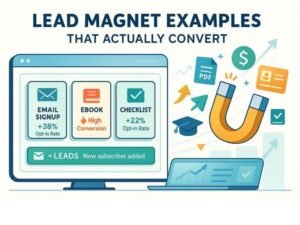
Lead Magnet Ideas by Industry
| Industry | Lead Magnet Example |
| Ecommerce | First Purchase Discount |
| Fitness | 30-Day Workout Plan |
| Education | Free Study Guide |
| Finance | Budget Planning Template |
| Digital Marketing | SEO Checklist |
| Real Estate | Home Buying Guide |
| Healthcare | Wellness Checklist |
| Travel | Vacation Planning Guide |
Creating industry-specific lead magnets helps attract subscribers who are genuinely interested in your business.
Signup Forms
Once you have a valuable lead magnet, the next step is making it easy for visitors to subscribe. Signup forms are the primary tool for collecting email addresses and growing your email list.
A signup form should be simple, attractive, and easy to complete. Complicated forms often reduce conversion rates because visitors may abandon them before submitting their information.
Where to Place Signup Forms
Strategic placement plays a major role in maximizing subscriptions.
Some of the best locations include:
Homepage
The homepage is one of the first pages visitors see. Placing a signup form above the fold or in a prominent section increases visibility.
Blog Posts
Readers who find value in your articles are more likely to subscribe. Add signup forms at the beginning, middle, or end of blog posts.
Sidebar
Sidebar forms remain visible while visitors browse your website, making them an effective way to capture subscribers without interrupting the reading experience.
Footer
Including a signup form in the website footer provides visitors with another opportunity to subscribe before leaving your site.
Contact Page
Visitors looking for your contact information may also be interested in receiving updates, making the contact page another suitable location.
Keep Forms Simple
Long forms often discourage users from subscribing.
For most businesses, requesting only the following information is enough:
- First Name
- Email Address
Additional fields can be collected later through surveys or customer interactions.
Write a Strong Call-to-Action
The button text on your signup form influences conversions.
Instead of using generic phrases like:
- Submit
Use more engaging alternatives such as:
- Get My Free Guide
- Download Now
- Join Free
- Start Learning
- Claim My Discount
- Subscribe Today
Clear and action-oriented language encourages visitors to complete the form.
Optimize for Mobile Devices
Many visitors browse websites on smartphones. Ensure your signup forms are mobile-friendly by using readable fonts, responsive layouts, and large buttons that are easy to tap.
A poor mobile experience can significantly reduce subscription rates.
Build Trust
Visitors are more likely to share their email addresses if they trust your website.
You can build confidence by:
- Including a privacy statement.
- Explaining how often emails will be sent.
- Avoiding misleading promises.
- Displaying testimonials or trust badges where appropriate.
Transparency reassures users that their information will be handled responsibly.
Test and Improve
There is no perfect signup form. Regularly test different headlines, button text, layouts, colors, and form placements to determine what works best for your audience.
Small improvements over time can lead to significantly higher conversion rates and faster email list growth.
Signup Form Best Practices
| Best Practice | Benefit |
| Keep forms short | Higher completion rates |
| Use a compelling headline | Attracts attention |
| Offer a valuable lead magnet | Encourages subscriptions |
| Optimize for mobile | Better user experience |
| Place forms strategically | Increases visibility |
| Include a clear CTA | Improves conversions |
| Build trust with privacy messaging | Reduces hesitation |
By combining a valuable lead magnet with well-designed signup forms, businesses can create a strong foundation for building a high-quality email list from scratch.
Landing Pages
While signup forms are useful for collecting email addresses, landing pages are designed specifically to maximize conversions. A landing page is a standalone web page with one primary objective—encouraging visitors to subscribe to your email list.
Unlike a homepage, which contains multiple navigation links and information about your business, a landing page focuses on a single action. This distraction-free approach often results in significantly higher conversion rates.
Whether you’re promoting a free ebook, webinar, checklist, discount coupon, or online course, a well-designed landing page can dramatically increase the number of subscribers you collect.
Why Landing Pages Are Important
Landing pages eliminate unnecessary distractions and guide visitors toward one clear goal. Instead of asking users to explore your website, they encourage immediate action.
Some key benefits include:
- Higher conversion rates
- Better lead generation
- Improved campaign tracking
- More targeted messaging
- Easier A/B testing
- Better user experience
Businesses that use dedicated landing pages often achieve better results than those relying only on homepage signup forms.
Essential Elements of a High-Converting Landing Page
Every successful landing page contains a few essential components that work together to encourage visitors to subscribe.
1. Clear Headline
The headline should immediately explain the benefit visitors will receive.
Examples:
- Download the Ultimate Email Marketing Guide
- Get Your Free SEO Checklist
- Learn Digital Marketing in 7 Days
- Join Our Weekly Business Newsletter
The headline should focus on solving a problem rather than describing features.
2. Supporting Description
Below the headline, include a short explanation of what subscribers will receive.
Keep this section concise while highlighting the value of your offer.
Example:
“Receive practical marketing tips, downloadable templates, and weekly growth strategies directly in your inbox.”
3. Attractive Visuals
Although the focus should remain on the signup form, relevant visuals help visitors understand the offer.
Examples include:
- Ebook cover
- Checklist preview
- Course screenshot
- Product image
- Webinar banner
Visuals should support the message rather than distract from it.
4. Simple Signup Form
Request only essential information.
A typical landing page form includes:
- First Name
- Email Address
The fewer fields visitors must complete, the higher the likelihood of conversion.
5. Strong Call-to-Action
The CTA button should clearly communicate what happens next.
Examples include:
- Download Free Guide
- Get Instant Access
- Join Now
- Start Learning
- Claim My Discount
Action-oriented wording generally performs better than generic buttons like “Submit.”
6. Trust Signals
Visitors are more likely to subscribe when they trust your brand.
Consider adding:
- Customer testimonials
- User reviews
- Privacy assurance
- Number of subscribers
- Security badges
These elements reduce hesitation and build confidence.
Best Practices for Landing Pages
To maximize conversions, follow these proven practices:
- Focus on one goal.
- Remove unnecessary navigation links.
- Keep the design clean.
- Highlight benefits instead of features.
- Use readable fonts.
- Optimize page loading speed.
- Make the page mobile responsive.
- Test different headlines and CTA buttons.
Small improvements in landing page design can significantly increase subscription rates.
Common Landing Page Mistakes
Many businesses unintentionally reduce conversions by making avoidable mistakes.
These include:
- Too much text
- Weak headlines
- Multiple calls-to-action
- Slow page loading
- Long signup forms
- Poor mobile experience
- Unclear value proposition
Keeping the page focused and user-friendly improves the overall experience and encourages more visitors to subscribe.
Landing Page Checklist
| Checklist Item | Status |
| Clear headline | ✔ |
| Benefit-focused description | ✔ |
| Attractive visuals | ✔ |
| Short signup form | ✔ |
| Strong CTA button | ✔ |
| Mobile responsive | ✔ |
| Trust signals | ✔ |
| Fast loading speed | ✔ |
Following this checklist ensures your landing pages are optimized for lead generation.
Website Pop-ups
Website pop-ups are one of the most effective tools for growing an email list when used strategically. A pop-up is a small window that appears while visitors browse your website, encouraging them to subscribe before they leave.
Although some users find pop-ups intrusive, well-designed pop-ups that provide genuine value can significantly improve email list growth.
The key is presenting the right offer at the right time without disrupting the user experience.
Types of Website Pop-ups
Different pop-ups serve different purposes. Choosing the right type depends on your marketing objectives.
Entry Pop-ups
These appear shortly after visitors arrive on your website.
Best used for:
- Newsletter subscriptions
- Welcome offers
- Limited-time discounts
Avoid displaying them immediately, as this may interrupt the browsing experience.
Exit-Intent Pop-ups
Exit-intent technology detects when a visitor is about to leave the website.
These pop-ups often include:
- Discount offers
- Free downloads
- Newsletter invitations
- Last-minute promotions
Because they appear before visitors exit, they help recover potential subscribers who might otherwise leave without taking action.
Scroll Pop-ups
These appear after visitors scroll through a certain percentage of the page.
Since users have already shown interest in the content, scroll-triggered pop-ups often generate better engagement than immediate pop-ups.
Timed Pop-ups
Timed pop-ups appear after visitors spend a predetermined amount of time on a page.
Displaying the pop-up after 20–30 seconds allows users to explore your content before being asked to subscribe.
Floating Bars
Instead of covering the screen, floating bars remain fixed at the top or bottom of the page.
These bars are less intrusive while still providing a visible subscription opportunity.
What Makes an Effective Pop-up?
Successful pop-ups focus on providing value rather than simply asking visitors to subscribe.
Include:
- A compelling headline
- A valuable lead magnet
- Brief supporting text
- Simple signup form
- Strong CTA button
Example:
Headline: Get Our Free Email Marketing Toolkit
Description: Join over 5,000 marketers and receive free templates, checklists, and weekly marketing tips.
CTA: Download Free Toolkit
Best Practices
To improve conversion rates while maintaining a positive user experience:
- Delay the pop-up by a few seconds.
- Show only one pop-up per session.
- Use mobile-friendly designs.
- Offer genuine value.
- Keep the design simple.
- Make closing the pop-up easy.
- Test different headlines and offers.
Respecting the visitor’s experience helps build trust while increasing subscriptions.
Mistakes to Avoid
Avoid these common errors:
- Showing multiple pop-ups on the same page.
- Interrupting users immediately after page load.
- Using misleading headlines.
- Asking for unnecessary information.
- Making the close button difficult to find.
- Displaying the same pop-up repeatedly.
These practices often frustrate visitors and can increase bounce rates.
Pop-up Performance Tips
Regularly monitor metrics such as:
- Conversion rate
- Click-through rate
- Bounce rate
- Time on page
- Form completion rate
Use this data to optimize your pop-up design, timing, and messaging over time.
Landing Pages vs Website Pop-ups
| Feature | Landing Pages | Website Pop-ups |
| Primary Purpose | Dedicated lead generation | Capture visitors before they leave |
| User Experience | Less intrusive | Can be intrusive if overused |
| Conversion Potential | High | High when properly timed |
| Best For | Paid campaigns, lead magnets | Website visitors and exit traffic |
| Mobile Friendly | Yes | Yes (when optimized) |
| A/B Testing | Easy | Easy |
Both landing pages and pop-ups play important roles in email list building. Landing pages provide a focused environment for conversions, while pop-ups help capture subscribers who might otherwise leave your website. When used together strategically, they create a powerful system for growing a high-quality email list.
Social Media Lead Generation
Social media platforms are excellent channels for attracting potential subscribers and directing them to your email list. While social media helps increase brand awareness, combining it with email marketing allows you to build long-term relationships with your audience.
Instead of asking followers to simply “subscribe,” provide a compelling reason to join your email list. Promote valuable resources such as free guides, discount coupons, webinars, templates, or exclusive content that users can access after subscribing.
Effective Social Media Strategies
- Add your email signup link to your social media profiles.
- Share lead magnets through regular posts.
- Use stories and short videos to promote exclusive offers.
- Create dedicated landing pages for social media campaigns.
- Run contests or giveaways that require email registration.
- Include clear calls-to-action in captions and profile bios.
Consistency across platforms helps increase visibility and encourages more users to subscribe.
Email List Growth Tips
Growing an email list is an ongoing process. Businesses that consistently provide value and optimize their subscription methods usually achieve better long-term results.
Some practical strategies include:
- Publish high-quality blog content regularly.
- Update lead magnets to keep them relevant.
- Test different signup forms and landing pages.
- Use personalized welcome emails.
- Segment subscribers based on interests.
- Encourage existing subscribers to share your newsletter.
- Promote your email list across multiple marketing channels.
- Monitor analytics and improve conversion rates over time.
Remember that a smaller, engaged audience is far more valuable than a large list of inactive subscribers.
Common Mistakes to Avoid
Many businesses slow their email list growth by making avoidable mistakes.
Some of the most common include:
- Buying email lists instead of building them organically.
- Offering weak or generic lead magnets.
- Using lengthy signup forms.
- Ignoring mobile optimization.
- Sending emails inconsistently.
- Failing to deliver the promised lead magnet immediately.
- Neglecting subscriber engagement after signup.
- Not reviewing email performance metrics.
Avoiding these mistakes helps maintain subscriber trust and improves long-term engagement.
Frequently Asked Questions (FAQs)
1. How long does it take to build an email list?
The timeline depends on your traffic, marketing efforts, and the value you offer. Consistent promotion and high-quality lead magnets can help you grow steadily over time.
2. Should I buy an email list?
No. Purchased lists often result in poor engagement, spam complaints, and reduced email deliverability. Always build your list through permission-based methods.
3. What is the best lead magnet?
The best lead magnet is one that solves a specific problem for your target audience, such as an ebook, checklist, template, discount, or free course.
4. How many fields should a signup form have?
For most businesses, requesting only a first name and email address is sufficient. Shorter forms generally convert better.
5. Can I build an email list without a website?
Yes. You can use landing pages, social media, webinars, online events, and other channels to collect email subscribers.
Final Checklist
Before launching your email list-building strategy, ensure you have completed the following:
| Checklist Item | Status |
| Defined your target audience | ✔ |
| Created a valuable lead magnet | ✔ |
| Added signup forms to your website | ✔ |
| Built a dedicated landing page | ✔ |
| Optimized forms for mobile devices | ✔ |
| Connected an email marketing platform | ✔ |
| Created a welcome email | ✔ |
| Promoted your signup page | ✔ |
| Monitored subscriber growth | ✔ |
Conclusion
Building an email list from scratch requires patience, consistency, and a focus on delivering value. Rather than chasing large subscriber numbers, concentrate on attracting people who are genuinely interested in your business. By combining valuable lead magnets, optimized signup forms, effective landing pages, strategic social media promotion, and continuous optimization, you can create an engaged email list that supports long-term business growth.
As your subscriber base grows, continue to provide relevant content, maintain regular communication, and analyze campaign performance. Over time, your email list will become one of your most valuable marketing assets, helping you generate leads, strengthen customer relationships, and increase conversions.
Start Building Your Email List Today
Now is the perfect time to grow your audience by building a high-quality email list. Choose a reliable email marketing platform, create a valuable lead magnet, and use signup forms, landing pages, and social media to attract subscribers. By consistently delivering valuable content and nurturing your audience, you’ll build a strong email list that drives engagement, increases conversions, and supports long-term business growth.
Leave a Reply