


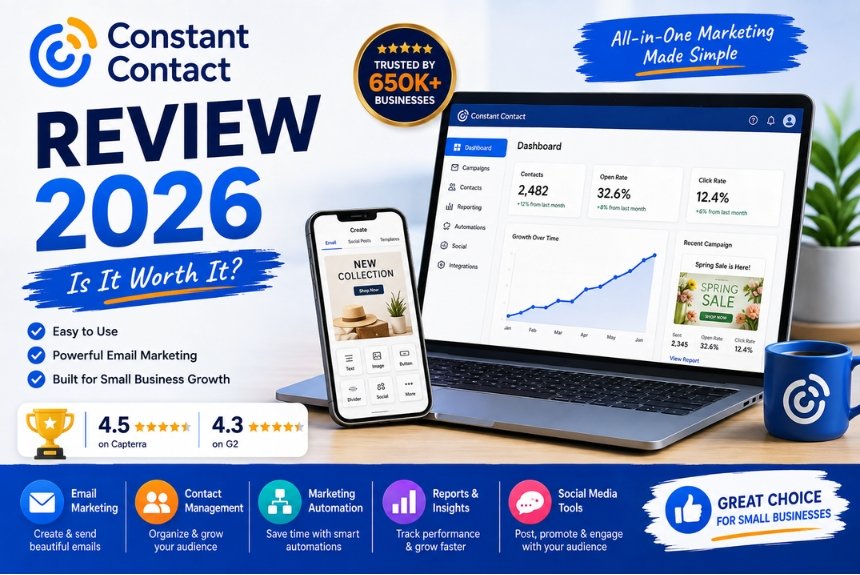
Constant Contact Review 2026: Is It Worth It?
Email marketing remains one of the most effective digital marketing channels in 2026, helping businesses connect with customers, nurture leads, and increase sales. While social media algorithms and paid advertising costs continue to change, email marketing offers businesses direct access to their audience with an impressive return on investment (ROI). According to industry studies, email marketing continues to generate one of the highest ROIs among digital marketing strategies, making it an essential tool for businesses of all sizes.
With dozens of email marketing platforms available today, choosing the right one can be challenging. Some platforms focus on advanced automation, while others prioritize affordability or ease of use. Among these options, Constant Contact has remained a trusted name for nearly three decades, serving small businesses, nonprofits, ecommerce brands, and entrepreneurs worldwide.
Known for its beginner-friendly interface, professionally designed email templates, reliable deliverability, and helpful customer support, Constant Contact has built a strong reputation in the email marketing industry. Over the years, it has expanded beyond basic email campaigns by adding marketing automation, SMS marketing, landing pages, social media tools, and AI-powered features.
However, with competitors such as Mailchimp, Brevo, GetResponse, ActiveCampaign, and MailerLite introducing new capabilities, many businesses wonder whether Constant Contact still offers enough value to justify its cost.
This detailed Constant Contact Review 2026 explores everything you need to know before choosing the platform. We’ll examine its features, pricing, automation capabilities, analytics, strengths, limitations, and alternatives to help you decide whether it is the right email marketing solution for your business.
Whether you’re starting your first email campaign or looking to switch from another provider, this review will help you make an informed decision.
Quick Overview
| Feature | Rating |
| Ease of Use | ⭐⭐⭐⭐⭐ |
| Email Templates | ⭐⭐⭐⭐⭐ |
| Automation | ⭐⭐⭐⭐☆ |
| Contact Management | ⭐⭐⭐⭐☆ |
| Reporting & Analytics | ⭐⭐⭐⭐☆ |
| Customer Support | ⭐⭐⭐⭐⭐ |
| Pricing | ⭐⭐⭐⭐☆ |
| Overall Rating | 4.6/5 |
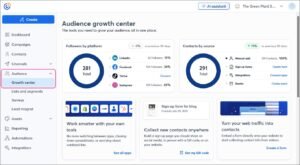
What is Constant Contact?
Constant Contact is a cloud-based email marketing platform that helps businesses create, send, manage, and analyze email campaigns. Designed primarily for small and medium-sized businesses, it allows users to build professional emails without coding or technical expertise.
Founded in 1995, Constant Contact initially focused on email newsletters but has since evolved into a comprehensive digital marketing platform. Today, it offers tools for email marketing, automation, landing pages, signup forms, SMS marketing, event promotion, and ecommerce integrations.
The platform’s greatest strength is its simplicity. Instead of overwhelming users with complex workflows and technical settings, Constant Contact provides an intuitive drag-and-drop editor, ready-made templates, and guided setup processes. This makes it an attractive choice for business owners who want professional marketing tools without a steep learning curve.
Businesses use Constant Contact for a variety of marketing activities, including:
- Sending newsletters
- Promoting products and services
- Announcing events
- Sharing company updates
- Running seasonal campaigns
- Welcoming new subscribers
- Recovering abandoned carts
- Collecting customer feedback
- Growing email lists
Its wide range of integrations also enables businesses to connect their email marketing efforts with ecommerce platforms, CRM systems, social media accounts, and website builders.
Key Highlights
- Easy drag-and-drop email builder
- Hundreds of customizable templates
- Marketing automation workflows
- AI-powered email writing assistance
- Contact segmentation and list management
- Landing page and signup form builder
- SMS marketing support
- Ecommerce integrations
- Real-time campaign analytics
- Phone, chat, and email customer support
These features make Constant Contact a well-rounded solution for businesses looking to manage multiple marketing activities from a single platform.
Company Overview
Constant Contact is one of the oldest and most established companies in the email marketing industry. Since its launch in 1995, it has continuously expanded its services to meet the changing needs of digital marketers and small businesses.
Unlike platforms built primarily for enterprise organizations, Constant Contact focuses on delivering practical marketing tools that are easy to understand and implement. Its mission is to help businesses strengthen customer relationships through consistent and effective communication.
Today, millions of email campaigns are created using Constant Contact, and the platform serves organizations across industries such as retail, healthcare, education, real estate, hospitality, and nonprofit services.
Company Snapshot
| Category | Details |
| Founded | 1995 |
| Headquarters | Waltham, Massachusetts, USA |
| Industry | Email Marketing & Digital Marketing Software |
| Best For | Small Businesses, Nonprofits, Startups |
| Deployment | Cloud-Based (SaaS) |
| Mobile App | Available |
| Free Trial | Yes |
Core Products and Services
Over the years, Constant Contact has expanded beyond email marketing to provide a broader marketing toolkit. Its main offerings include:
- Email Marketing
Create newsletters, promotional emails, product announcements, and seasonal campaigns using a drag-and-drop editor and professionally designed templates.
- Marketing Automation
Automate repetitive tasks such as welcome emails, follow-up sequences, birthday greetings, and customer engagement campaigns.
- SMS Marketing
Reach customers instantly with promotional text messages, reminders, and limited-time offers.
- Landing Pages
Design landing pages to capture leads, promote products, or register attendees for events without needing additional website-building software.
- Signup Forms
Create embedded forms and pop-ups to grow your email list and collect customer information directly from your website.
- Social Media Marketing
Schedule and manage social media posts while maintaining consistent messaging across multiple channels.
- Reporting & Analytics
Track campaign performance with metrics such as open rates, click-through rates, bounce rates, and subscriber engagement.
Why Businesses Choose Constant Contact
Constant Contact has remained popular because it focuses on solving common marketing challenges for growing businesses.
Easy to Learn
The platform requires very little technical knowledge, making it suitable for beginners.
Professional Design
Users can quickly create attractive emails using customizable templates that work well on both desktop and mobile devices.
Reliable Email Delivery
Constant Contact has a strong reputation for delivering emails to subscribers’ inboxes, helping businesses improve engagement.
Helpful Customer Support
Many users appreciate the availability of phone, live chat, and knowledge base support, especially during the initial setup process.
All-in-One Marketing Tools
Instead of using separate tools for email, landing pages, and signup forms, businesses can manage these activities from a single platform.
Pros at a Glance
✔ Beginner-friendly interface
✔ Excellent email templates
✔ Reliable deliverability
✔ Strong customer support
✔ Marketing automation
✔ AI-assisted content creation
✔ Landing pages and signup forms
✔ Ecommerce integrations
Cons at a Glance
✖ Pricing may increase as contact lists grow
✖ Advanced automation is less flexible than some competitors
✖ No permanent free plan
✖ Some premium features require higher-tier plans
What Makes Constant Contact Different?
Many email marketing platforms focus either on affordability or advanced automation. Constant Contact positions itself between these extremes by offering a balance of ease of use, professional features, and dependable customer support.
For businesses that value simplicity and efficiency over highly technical workflows, it provides a practical solution capable of supporting everyday marketing needs. Rather than overwhelming users with complex configurations, it emphasizes quick campaign creation, reliable delivery, and tools that help businesses communicate consistently with their audience.
As a result, Constant Contact continues to be a preferred choice for startups, nonprofits, local businesses, and organizations looking for a straightforward yet capable email marketing platform.
Key Features
Constant Contact has evolved from a simple email newsletter tool into a complete digital marketing platform. While its core strength remains email marketing, it now includes automation, AI-powered tools, landing pages, SMS marketing, ecommerce integrations, and advanced reporting. The platform is designed to help businesses manage customer communication from one dashboard without requiring technical expertise.
Below are the key features that make Constant Contact a popular choice in 2026.
-
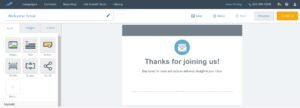
Drag-and-Drop Email Editor
The drag-and-drop editor is one of Constant Contact’s most user-friendly features. It allows users to create professional email campaigns without writing a single line of code.
Instead of designing emails from scratch, users simply drag elements such as text blocks, images, buttons, dividers, and social media icons into the email layout. Every element can be resized, rearranged, and customized to match your brand identity.
This editor is particularly useful for beginners who want to create visually appealing campaigns quickly.
Key Benefits
No coding skills required
Simple drag-and-drop interface
Mobile-responsive email layouts
Real-time editing and preview
Easy image and logo placement
Custom color and font options
Best for: Small businesses, startups, bloggers, and nonprofits.
-
Professional Email Templates
Designing emails from scratch can be time-consuming. Constant Contact simplifies the process by offering hundreds of professionally designed templates suitable for different industries and campaign types.
Whether you’re sending a newsletter, announcing a product launch, or promoting a holiday sale, you can choose a template and customize it with your branding.
| Category | Example Use |
| Retail | Product promotions |
| Ecommerce | Sales campaigns |
| Restaurants | Special offers |
| Healthcare | Appointment reminders |
| Real Estate | Property listings |
| Education | Student newsletters |
| Nonprofits | Fundraising campaigns |
| Events | Invitations and registrations |
Each template is mobile responsive, ensuring your emails look professional on smartphones, tablets, and desktops.
-
AI-Powered Content Assistant
Creating compelling email copy can be challenging, especially for small business owners who manage marketing themselves.
Constant Contact includes AI-powered writing tools that help users generate content faster. The AI assistant can suggest subject lines, draft promotional copy, improve calls-to-action, and rewrite existing content for better readability.
For example, instead of a generic subject line like “Weekly Newsletter,” the AI may suggest something more engaging such as “Don’t Miss This Week’s Exclusive Updates and Offers!”
While AI-generated content should always be reviewed before sending, it can significantly reduce the time required to create campaigns.
-
Landing Page Builder
Landing pages play an important role in lead generation and marketing campaigns. Constant Contact includes a built-in landing page builder, allowing users to create dedicated pages without purchasing separate software.
Businesses can use landing pages to:
Promote products
Collect email subscribers
Register webinar participants
Launch new services
Offer downloadable resources
Capture leads from advertising campaigns
The editor follows the same drag-and-drop approach as the email builder, making it easy to create professional pages within minutes.
-
Signup Forms and Pop-ups
Growing an email list is essential for long-term marketing success.
Constant Contact enables businesses to create customizable signup forms that can be embedded on websites or displayed as pop-ups.
Features include:
Inline forms
Pop-up forms
Mobile-friendly layouts
Custom branding
Multiple field options
Spam protection
These forms help businesses collect subscriber information while maintaining a consistent brand experience.
-
Contact Segmentation
Rather than sending the same message to every subscriber, Constant Contact allows users to divide contacts into targeted groups.
Segmentation can be based on factors such as:
Purchase history
Geographic location
Customer interests
Email engagement
Signup source
Event participation
Customer status
For example, an online clothing store can send winter promotions only to customers in colder regions while promoting summer collections to customers in warmer areas.
This targeted approach improves engagement and reduces unsubscribe rates.
-
Marketing Automation
Automation is one of the most valuable features available in Constant Contact.
Instead of manually sending emails, businesses can create automated workflows that deliver messages based on customer actions.
Common automation examples include:
Welcome email series
Birthday greetings
Abandoned cart reminders
Purchase follow-ups
Re-engagement campaigns
Event reminders
Anniversary emails
Automation saves time while ensuring subscribers receive relevant communication at the right moment.
-
SMS Marketing
Email remains an essential communication channel, but SMS marketing offers significantly higher open rates.
Constant Contact allows eligible users to create SMS campaigns alongside email campaigns.
Businesses commonly use SMS for:
Flash sales
Appointment reminders
Limited-time offers
Event notifications
Coupon codes
Delivery updates
Using email and SMS together creates a stronger multi-channel marketing strategy.
-
Ecommerce Integrations
For ecommerce businesses, Constant Contact integrates with several popular online store platforms.
These integrations help automate customer communication and improve sales through features such as:
Product recommendations
Abandoned cart emails
Order confirmation emails
Customer segmentation
Purchase tracking
Revenue reporting
This makes it easier to build personalized campaigns based on customer shopping behavior.
-
Social Media Marketing Tools
Constant Contact also supports basic social media marketing by allowing users to create and schedule posts from a centralized dashboard.
Businesses can use these tools to:
Promote blog posts
Share product launches
Announce events
Drive traffic to landing pages
Maintain consistent branding across channels
Although it is not a dedicated social media management platform, the feature adds convenience for small businesses managing multiple marketing activities.
-
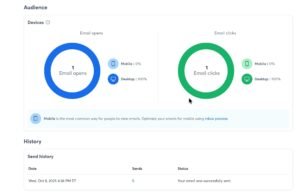
Real-Time Reporting Dashboard
After sending a campaign, Constant Contact provides performance reports that help users understand how subscribers interact with their emails.
Important metrics include:
Open rate
Click-through rate (CTR)
Bounce rate
Unsubscribe rate
Delivery rate
Device usage
Link performance
These insights help marketers identify successful campaigns and optimize future email strategies.
-
Mobile App
The Constant Contact mobile app allows users to manage campaigns while away from their desks.
Using the app, businesses can:
Monitor campaign performance
View subscriber activity
Add contacts
Schedule emails
Access reports
This flexibility is useful for entrepreneurs and business owners who travel frequently or work remotely.
Key Features Summary
| Feature | Available | Benefit |
| Drag-and-Drop Editor | ✔ | Easy email creation |
| Professional Templates | ✔ | Faster campaign design |
| AI Content Assistant | ✔ | Speeds up copywriting |
| Landing Pages | ✔ | Lead generation |
| Signup Forms | ✔ | List building |
| Automation | ✔ | Saves time |
| SMS Marketing | ✔ | Multi-channel communication |
| Ecommerce Integrations | ✔ | Better online sales |
| Analytics | ✔ | Performance tracking |
| Mobile App | ✔ | Marketing on the go |
Our Verdict on the Features
Constant Contact offers one of the most balanced feature sets among email marketing platforms for small and medium-sized businesses. Its intuitive interface, professionally designed templates, automation capabilities, and integrated marketing tools make it suitable for users who want powerful functionality without a steep learning curve.
While enterprise marketers may require more advanced automation or CRM capabilities, Constant Contact provides everything most growing businesses need to build, manage, and optimize successful email marketing campaigns from a single platform.
Email Templates
A well-designed email can significantly improve engagement, and Constant Contact makes the design process simple with its extensive collection of professionally built templates. Whether you’re sending a newsletter, announcing a product launch, or promoting a seasonal sale, the platform provides templates that can be customized to match your brand.
The drag-and-drop editor allows users to modify colors, fonts, images, buttons, and layouts without requiring coding skills. You can also save customized templates for future campaigns, helping maintain consistent branding while reducing design time.
Another advantage is that all templates are mobile-responsive. Since a large percentage of emails are opened on smartphones, every template automatically adjusts to different screen sizes, ensuring a seamless reading experience.
Key Benefits of Constant Contact Templates
Hundreds of professionally designed templates
Industry-specific layouts for different business types
Easy drag-and-drop customization
Mobile-responsive designs
Brand logo, colors, and fonts can be added easily
Save custom templates for future use
Automation Features
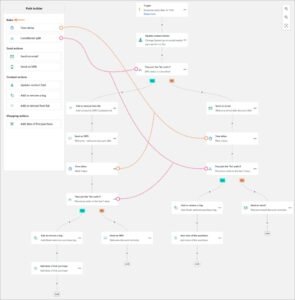
Marketing automation helps businesses communicate with customers at the right time without manually sending every email. Constant Contact includes automation tools that simplify repetitive marketing tasks and improve customer engagement.
Users can create automated workflows based on customer actions or specific dates. For example, a welcome email can be sent automatically when someone subscribes to a newsletter, while follow-up emails can be triggered after a purchase or event registration.
Common automation workflows include:
Welcome email series
Birthday and anniversary emails
Abandoned cart reminders
Follow-up emails after purchases
Re-engagement campaigns for inactive subscribers
Event confirmation and reminder emails
These workflows help businesses save time while providing a more personalized experience for subscribers.
Although Constant Contact’s automation capabilities are sufficient for most small and medium-sized businesses, they are simpler than the advanced workflow builders offered by platforms like ActiveCampaign or GetResponse. Businesses with highly complex customer journeys may require more sophisticated automation features.
Automation Highlights
| Automation Feature | Purpose |
| Welcome Emails | Introduce new subscribers to your brand |
| Drip Campaigns | Nurture leads over time |
| Abandoned Cart Emails | Recover lost ecommerce sales |
| Birthday Emails | Increase customer engagement |
| Event Reminders | Improve attendance rates |
| Re-engagement Campaigns | Win back inactive subscribers |
Overall, Constant Contact strikes a good balance between ease of use and automation functionality. It provides enough automation for most growing businesses without overwhelming users with complex setup processes.
Section Summary: Constant Contact’s template library and automation features make campaign creation faster and more efficient. The combination of responsive templates, simple customization, and practical automation workflows helps businesses deliver professional, timely, and engaging email campaigns with minimal effort.
Pros & Cons
Like any email marketing platform, Constant Contact has strengths and limitations. While it excels in usability and customer support, businesses with advanced marketing requirements may find some competitors more suitable.
Pros
Beginner-friendly interface with a minimal learning curve
Large library of responsive email templates
Drag-and-drop editor with no coding required
Reliable email deliverability and good sender reputation
Built-in marketing automation for common workflows
AI-powered content assistance
Landing pages, signup forms, and SMS marketing support
Excellent customer support via phone, live chat, and knowledge base
Integrates with popular ecommerce and business tools
Cons
More expensive than some entry-level competitors
Advanced automation features are less powerful than enterprise platforms
No permanent free plan
Subscription costs increase as contact lists grow
Some premium features are available only on higher-tier plans
Pros & Cons Comparison
| Pros | Cons |
| Easy to use | Higher pricing than some alternatives |
| Excellent templates | Limited advanced automation |
| Strong customer support | No permanent free plan |
| Good deliverability | Costs increase with larger contact lists |
| Useful integrations | Premium features require higher plans |
Overall, Constant Contact is an excellent choice for businesses looking for a reliable and easy-to-use email marketing platform, though power users may prefer platforms with more advanced automation capabilities.
Who Should Use Constant Contact?
Constant Contact is designed primarily for small and medium-sized businesses that want to create professional email campaigns without investing significant time in learning complex software.
It is particularly suitable for:
Small Businesses
Local businesses, startups, and service providers can quickly create newsletters, promotional emails, and customer updates using the platform’s intuitive interface.
Ecommerce Stores
Online retailers can benefit from product recommendations, abandoned cart emails, customer segmentation, and purchase follow-up campaigns.
Nonprofit Organizations
The platform is well suited for fundraising campaigns, volunteer communication, event promotion, and donor newsletters.
Content Creators and Bloggers
Creators can grow subscriber lists, share new content, and maintain regular communication with their audience through automated email campaigns.
Educational Institutions
Schools, colleges, and training providers can use Constant Contact to send newsletters, event invitations, and important announcements to students and parents.
Who May Need Another Platform?
Businesses with complex sales funnels, enterprise-level automation requirements, or advanced CRM workflows may find platforms like ActiveCampaign or GetResponse better suited to their needs.
Best Constant Contact Alternatives
Although Constant Contact is a strong email marketing solution, comparing alternatives can help you choose the platform that best matches your business goals and budget.
| Platform | Best For | Main Strength |
| Constant Contact | Small Businesses | Ease of use and customer support |
| Mailchimp | Beginners | Free plan and user-friendly interface |
| Brevo | Budget-Conscious Businesses | Affordable email and SMS marketing |
| GetResponse | Digital Marketers | Advanced automation and webinars |
| ActiveCampaign | Growing Businesses | Powerful CRM and automation |
| MailerLite | Bloggers & Startups | Affordable pricing and simple interface |
Which Platform Should You Choose?
Choose Constant Contact if you want an easy-to-use platform with reliable customer support and professional templates.
Choose Mailchimp if you need a free plan and basic email marketing.
Choose Brevo if your priority is affordable email and SMS marketing.
Choose GetResponse if webinars and conversion funnels are essential to your strategy.
Choose ActiveCampaign if advanced automation and CRM integration are your top priorities.
Choose MailerLite if you’re a freelancer, blogger, or startup looking for a budget-friendly option.
Constant Contact stands out by offering a balanced combination of simplicity, functionality, and dependable support, making it one of the best options for businesses that value ease of use over highly complex marketing workflows.
Section Summary: While several email marketing platforms offer competitive features, Constant Contact remains one of the best choices for small businesses and organizations seeking a reliable, user-friendly solution with strong customer support and practical marketing tools.
Frequently Asked Questions (FAQs)
-
Is Constant Contact good for beginners?
Yes. Constant Contact is one of the easiest email marketing platforms to use. Its intuitive dashboard, drag-and-drop editor, and ready-made templates make it ideal for beginners and small business owners with little or no technical experience.
-
Does Constant Contact offer a free trial?
Yes. Constant Contact offers a free trial that allows users to explore its features before purchasing a subscription. The trial duration and available features may vary by region or promotional offer.
-
Can I automate email campaigns with Constant Contact?
Yes. The platform supports marketing automation, including welcome emails, drip campaigns, abandoned cart reminders, birthday messages, event reminders, and follow-up emails based on customer actions.
-
Is Constant Contact suitable for ecommerce businesses?
Yes. Constant Contact integrates with several ecommerce platforms and supports features such as product recommendations, customer segmentation, abandoned cart emails, and purchase follow-ups to help increase sales.
-
Does Constant Contact provide email templates?
Yes. It includes hundreds of professionally designed, mobile-responsive templates that can be customized using the drag-and-drop editor to match your brand.
-
How does Constant Contact compare with Mailchimp?
Both platforms are beginner-friendly. Constant Contact is known for its customer support and ease of use, while Mailchimp offers a permanent free plan and a broader range of integrations. The better choice depends on your budget and marketing requirements.
-
Can I use Constant Contact for nonprofits?
Absolutely. Many nonprofit organizations use Constant Contact for fundraising campaigns, donor newsletters, volunteer communication, and event promotion because of its ease of use and reliable email delivery.
-
Is Constant Contact worth the price?
For businesses that value user-friendly tools, dependable deliverability, and responsive customer support, Constant Contact offers good value. Although it may cost more than some competitors, its comprehensive feature set makes it a worthwhile investment for many small and growing businesses.
Final Verdict
After evaluating its features, pricing, usability, and overall performance, Constant Contact continues to be one of the best email marketing platforms for small and medium-sized businesses in 2026.
Its biggest strengths include an intuitive interface, professionally designed templates, reliable email deliverability, useful automation tools, and excellent customer support. These features make it an attractive choice for businesses that want to launch effective email marketing campaigns without spending weeks learning complex software.
While the platform may not offer the most advanced automation or the lowest pricing in the market, it delivers a balanced combination of simplicity and functionality. Businesses looking for enterprise-level workflows may prefer alternatives such as ActiveCampaign or GetResponse, but for most startups, nonprofits, local businesses, and ecommerce stores, Constant Contact provides more than enough features to manage successful email marketing campaigns.
Overall Rating
| Category | Rating |
| Ease of Use | ⭐⭐⭐⭐⭐ |
| Features | ⭐⭐⭐⭐☆ |
| Templates | ⭐⭐⭐⭐⭐ |
| Automation | ⭐⭐⭐⭐☆ |
| Analytics | ⭐⭐⭐⭐☆ |
| Customer Support | ⭐⭐⭐⭐⭐ |
| Value for Money | ⭐⭐⭐⭐☆ |
| Overall Score | 4.6/5 |
Should You Choose Constant Contact?
Choose Constant Contact if you:
- Want an easy-to-use email marketing platform.
- Run a small or medium-sized business.
- Need professional email templates.
- Value responsive customer support.
- Want reliable email deliverability.
- Prefer an all-in-one marketing solution.
Consider another platform if you:
- Need highly advanced automation workflows.
- Require enterprise-level CRM functionality.
- Are looking for a permanent free plan.
- Have a very limited marketing budget.
Overall, Constant Contact remains a dependable and feature-rich solution that helps businesses create engaging email campaigns, build stronger customer relationships, and grow their online presence.
Why Constant Contact Stands Out in 2026
The email marketing industry continues to evolve with new AI-powered tools, advanced automation, and increasing personalization. Despite growing competition, Constant Contact remains relevant because it focuses on providing a reliable, easy-to-use platform rather than overwhelming users with unnecessary complexity.
Its intuitive interface, professional templates, dependable deliverability, and responsive customer support make it an excellent option for businesses that want effective email marketing without a steep learning curve.
While enterprise organizations may require more advanced automation capabilities, Constant Contact successfully meets the needs of most small and medium-sized businesses by combining simplicity with practical marketing features. This balance is one of the key reasons it continues to be a trusted choice for email marketers in 2026.
Ready to Grow Your Business with Constant Contact?
If you’re searching for an email marketing platform that combines simplicity, professional design tools, automation, and dependable customer support, Constant Contact is well worth considering in 2026.
Take advantage of its free trial to explore the platform, test its features, and determine whether it aligns with your business goals. Whether you’re a startup, nonprofit organization, ecommerce brand, or established small business, Constant Contact provides the tools needed to create impactful email campaigns and build lasting customer relationships.
Leave a Reply