


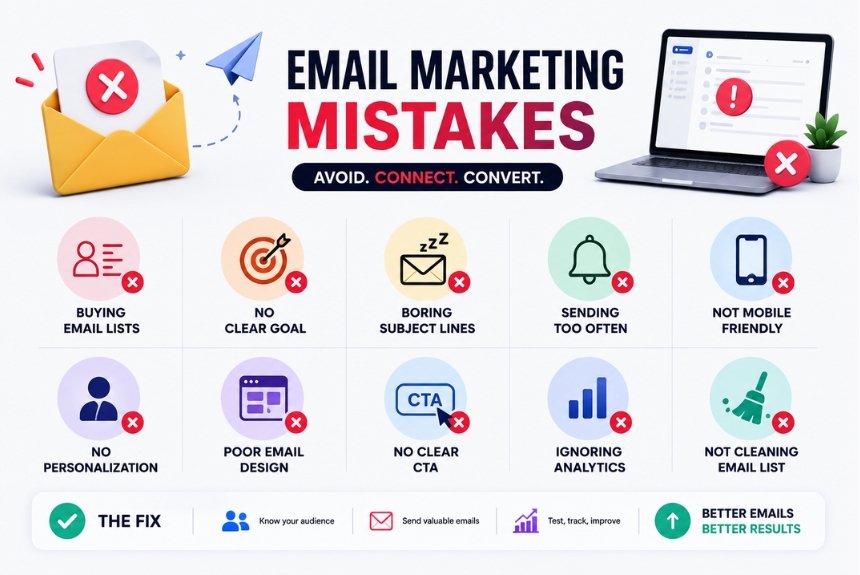
Email Marketing Mistakes That Hurt Your Sales: Common Errors to Avoid
Email marketing continues to be one of the most effective digital marketing channels for businesses looking to connect with their audience, nurture relationships, and increase revenue. Unlike many other marketing platforms, email allows businesses to communicate directly with potential and existing customers through personalized messages.
From small businesses to large enterprises, companies use email marketing to promote products, share updates, build brand awareness, and encourage customer loyalty. However, achieving success with email marketing is not as simple as sending promotional messages to a large number of people.
Many businesses invest time and money into creating email campaigns but still fail to generate expected results. The main reason behind this failure is making common email marketing mistakes that reduce engagement, damage customer relationships, and negatively affect sales.
A poorly planned email campaign can lead to low open rates, fewer clicks, increased unsubscribes, and even emails being marked as spam. These problems not only reduce immediate conversions but can also harm your brand reputation in the long term.
For example, sending emails to people who never subscribed, creating boring subject lines, ignoring mobile users, or sending irrelevant content can quickly cause customers to lose interest in your brand.
Successful email marketing is not about sending more emails; it is about sending the right message to the right audience at the right time. Businesses need to focus on quality content, audience targeting, personalization, and performance analysis to achieve better results.
This article explains the most common email marketing mistakes that hurt your sales and provides practical solutions to avoid them. By understanding these mistakes, businesses can improve their campaigns, increase customer engagement, and convert more subscribers into loyal customers.
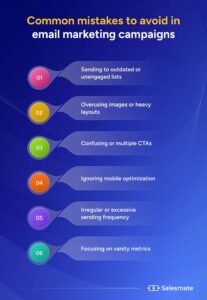
Why Avoiding Email Marketing Mistakes Is Important
Before understanding individual mistakes, it is important to know why email marketing errors can have such a significant impact on business growth.
Email marketing works because customers voluntarily allow brands to communicate with them. This permission creates an opportunity to build trust and provide value.
However, when businesses misuse this communication channel, they risk damaging customer relationships.
Some major consequences of poor email marketing practices include:
| Email Marketing Mistake | Impact on Business |
| Sending irrelevant emails | Lower customer interest |
| Buying email lists | Poor deliverability |
| Weak subject lines | Lower open rates |
| Poor targeting | Reduced conversions |
| No personalization | Less engagement |
| Ignoring analytics | Missed improvement opportunities |
Avoiding these mistakes helps businesses:
- Improve email open rates
- Increase website traffic
- Generate more leads
- Build stronger customer relationships
- Increase sales conversions
- Maintain a positive brand image
Understanding Email Marketing Success
A successful email marketing campaign depends on multiple factors working together.
1. The Right Audience
The foundation of email marketing success is reaching people who are genuinely interested in your products or services.
A smaller audience that actively engages with your emails is more valuable than thousands of inactive subscribers.
2. Valuable Content
Customers do not want constant promotional messages. They expect useful information, solutions, offers, and content that helps them.
Successful emails provide value before asking customers to make a purchase.
3. Proper Timing
Even a great email can fail if it reaches customers at the wrong time.
Businesses need to understand customer behavior and send emails when subscribers are most likely to engage.
4. Continuous Optimization
Email marketing requires regular testing and improvement.
Businesses should analyze:
- Which subject lines perform better
- Which content gets more clicks
- Which offers generate sales
- Which segments respond positively
1. Buying Email Lists
One of the biggest email marketing mistakes businesses make is purchasing email lists instead of building their own subscriber database.
Many companies believe that having thousands of email addresses will automatically increase their sales. However, the quality of an email list matters more than the size.
A large list filled with uninterested users will not generate meaningful results.
What Are Purchased Email Lists?
A purchased email list is a collection of email addresses obtained from third-party sources instead of users who voluntarily subscribed to receive communication.
These lists are often sold as a shortcut for businesses that want to quickly increase their reach.
For example, a company may purchase a list containing 50,000 email addresses and send promotional emails hoping to gain new customers.
However, most people on these lists:
- Do not know your brand
- Did not request your emails
- May not need your products
- May consider your message unwanted
This creates a poor customer experience.
Why Businesses Buy Email Lists
Businesses usually purchase email lists because they believe:
1. More Contacts Mean More Sales
Many marketers assume that sending emails to more people automatically increases revenue.
However, sales depend on audience quality, not just quantity.
A list of 1,000 interested subscribers can generate better results than a list of 100,000 unrelated contacts.
2. It Saves Time
Building an organic email list requires time and effort.
Businesses may purchase lists because they want instant access to potential customers.
However, this shortcut often creates more problems than benefits.
3. They Want Faster Growth
New businesses sometimes feel pressure to grow quickly and use purchased lists as an easy solution.
But long-term email marketing success requires trust, permission, and genuine customer relationships.
Email Marketing Mistakes That Hurt Your Sales: Common Errors to Avoid
1. Buying Email Lists
Why Buying Email Lists Hurts Your Sales
Although purchasing email lists may seem like a quick way to increase your audience, it can create serious problems that directly affect sales and business growth.
1. Low Email Engagement Rates
People on purchased email lists usually do not have any relationship with your brand. Since they never requested your emails, they are less likely to open, read, or interact with your messages.
Low engagement signals that your emails are not valuable, which can negatively affect future campaigns.
Important engagement metrics affected include:
- Open rates
- Click-through rates
- Conversion rates
- Customer responses
For example, a company may send an email campaign to 50,000 purchased contacts, but only a small percentage may open the email or visit the website.
2. Higher Spam Complaints
When users receive emails they did not sign up for, they may mark them as spam.
A high number of spam complaints can damage your sender reputation and make email service providers less likely to deliver your future emails successfully.
This means even your genuine subscribers may stop receiving your messages.
3. Poor Email Deliverability
Email deliverability refers to the ability of your emails to successfully reach the inbox instead of the spam folder.
Purchased lists often contain:
- Invalid email addresses
- Deleted accounts
- Spam trap addresses
- Inactive users
Sending emails to these addresses increases bounce rates and harms your email reputation.
4. Damage to Brand Reputation
Trust is one of the most important factors in marketing.
When customers receive unwanted emails, they may develop a negative opinion about your brand.
Instead of viewing your company as helpful, they may see it as intrusive or unreliable.
A damaged reputation can make it harder to build long-term customer relationships.
How to Build a Quality Email List Instead
Instead of buying email lists, businesses should focus on creating an organic subscriber base.
An organic email list contains people who have willingly shared their email addresses because they are interested in your brand.
Effective Ways to Build an Email List
1. Create Website Signup Forms
Add email signup forms on important pages of your website, such as:
- Homepage
- Blog pages
- Product pages
- Checkout pages
Make the signup process simple and explain the benefit of subscribing.
Example:
“Subscribe to receive weekly marketing tips and exclusive offers.”
2. Offer Valuable Lead Magnets
A lead magnet is something valuable offered in exchange for a visitor’s email address.
Examples include:
- Free ebooks
- Checklists
- Templates
- Guides
- Webinars
- Discount coupons
People are more willing to subscribe when they receive something useful.
3. Use Content Marketing
High-quality content attracts people who are already interested in your industry.
Businesses can create:
- Blog posts
- Videos
- Tutorials
- Industry reports
Visitors who find value in your content are more likely to join your email list.
4. Collect Emails During Purchases
Online stores can ask customers to subscribe during checkout.
Existing customers are already familiar with your brand, making them more likely to engage with future emails.
Email List Building: Organic vs Purchased
| Organic Email List | Purchased Email List |
| Users give permission | Users did not request emails |
| Higher engagement | Low engagement |
| Better conversion rates | Poor sales results |
| Builds customer trust | Damages reputation |
| Long-term growth | Short-term approach |
2. Poor Subject Lines
The subject line is one of the most important elements of an email campaign.
It is the first thing subscribers notice when your email appears in their inbox. A strong subject line creates curiosity and encourages people to open the email.
However, many businesses make the mistake of writing boring, unclear, or overly promotional subject lines.
Even if your email content is excellent, a poor subject line can prevent people from reading it.
Why Subject Lines Matter in Email Marketing
Every day, people receive hundreds of emails from different brands, businesses, and individuals.
Because of this competition, subscribers quickly decide which emails deserve attention.
A subject line helps answer an important question:
“Why should I open this email?”
If the answer is not clear, users will most likely ignore the message.
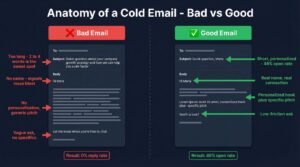
Common Subject Line Mistakes
1. Using Generic Subject Lines
Many businesses use simple subject lines that do not create interest.
Examples:
❌ Monthly Newsletter
❌ Company Updates
❌ New Information
❌ Latest News
These subject lines do not explain the value of opening the email.
A better approach is to highlight the benefit.
Examples:
✅ “5 Marketing Strategies That Can Increase Your Sales”
✅ “Your Free Marketing Checklist Is Ready”
✅ “Simple Ways to Improve Customer Engagement”
2. Making Subject Lines Too Promotional
Excessive promotional language can make emails look like advertisements.
Examples:
❌ Buy Now!!!
❌ Huge Sale!!!
❌ Limited Offer!!!
❌ Best Deal Ever!!!
These types of subject lines may reduce trust and increase the chances of emails being ignored.
Instead, focus on value-driven messaging.
Example:
Instead of:
❌ “Buy Our Product Today”
Use:
✅ “Discover How Our Solution Can Save You Time”
3. Writing Very Long Subject Lines
Long subject lines often get cut off, especially on mobile devices.
A good subject line should be:
- Clear
- Short
- Relevant
- Attention-grabbing
Generally, keeping subject lines concise improves readability.
4. Not Creating Curiosity
A subject line should encourage users to learn more.
Weak:
❌ “Our New Product”
Better:
✅ “A New Solution Designed to Make Your Work Easier”
Curiosity encourages subscribers to open the email.
How to Write High-Converting Subject Lines
1. Highlight Benefits
People are more interested in benefits than features.
Example:
Instead of:
“New SEO Tool Available”
Use:
“Improve Your Website Rankings With This New Tool”
2. Use Personalization
Personalized subject lines can make emails feel more relevant.
Examples:
“John, here is your exclusive offer”
“Your personalized marketing report is ready”
3. Create Urgency Carefully
Urgency can encourage action when used correctly.
Examples:
- “Your offer ends tomorrow”
- “Registration closes this week”
However, avoid using urgency in every email because it may reduce trust.
4. Test Different Subject Lines
A/B testing helps identify which subject lines perform better.
Businesses can test:
- Different wording
- Different lengths
- Questions vs statements
- Personalized vs non-personalized versions
Sending Emails Too Frequently
Sending emails regularly is important for maintaining communication with your audience. However, sending too many emails without considering subscriber preferences is one of the most common email marketing mistakes that can hurt sales.
Many businesses believe that increasing email frequency will automatically increase conversions. However, excessive emails can have the opposite effect.
When subscribers feel overwhelmed by constant messages, they may stop opening emails, unsubscribe from your list, or mark your messages as spam.
Successful email marketing is about maintaining the right balance between staying connected and respecting your audience’s inbox.
Understanding Email Frequency
Email frequency refers to how often a business sends emails to its subscribers.
The ideal frequency depends on various factors, including:
- Industry type
- Audience expectations
- Type of content
- Customer buying behavior
- Business goals
For example:
- A daily deals website may send emails more frequently.
- A professional service company may send weekly newsletters.
- A B2B company may send educational updates occasionally.
There is no universal frequency that works for every business. The key is finding a schedule that provides value without annoying subscribers.
How Sending Too Many Emails Hurts Sales
1. Increases Unsubscribe Rates
When subscribers receive too many emails, they may feel frustrated and decide to leave your email list.
A high unsubscribe rate indicates that your content or sending frequency does not match customer expectations.
Example:
A customer signs up for weekly marketing tips but starts receiving promotional emails every day. Over time, they may lose interest and unsubscribe.
2. Reduces Email Engagement
Email marketing success depends heavily on engagement.
When businesses send too many messages, subscribers may begin ignoring them.
This can reduce:
- Email open rates
- Click-through rates
- Website visits
- Product engagement
Even if subscribers remain on your list, inactive users are unlikely to become customers.
3. Damages Customer Relationships
Email marketing is based on trust.
Subscribers allow businesses to enter their personal inbox because they expect valuable communication.
Sending excessive promotional emails can make customers feel that the brand only cares about selling instead of helping.
This can negatively affect brand loyalty.
4. Increases Spam Complaints
Some users may mark frequent emails as spam instead of unsubscribing.
Spam complaints are harmful because they can affect:
- Sender reputation
- Email deliverability
- Future campaign performance
A damaged sender reputation can cause even legitimate emails to land in spam folders.
Signs You Are Sending Too Many Emails
Businesses should review their email performance if they notice:
1. Increasing Unsubscribe Rates
A sudden increase in unsubscribes may indicate that subscribers are unhappy with email frequency.
2. Lower Open Rates
If fewer people are opening emails over time, your audience may be experiencing email fatigue.
3. Decreasing Click Rates
A drop in clicks suggests that subscribers are losing interest in your content.
4. More Spam Reports
An increase in spam complaints is a warning sign that your email strategy needs improvement.
How to Find the Right Email Frequency
1. Understand Your Audience
Different audiences have different expectations.
Analyze:
- Customer behavior
- Previous campaign performance
- Engagement patterns
Understanding your subscribers helps determine how often you should communicate.
2. Set Expectations During Signup
Tell subscribers what they will receive when they join your email list.
Example:
“Subscribe to receive one weekly newsletter with marketing tips and exclusive offers.”
Clear expectations prevent disappointment.
3. Focus on Quality Over Quantity
Sending one valuable email is better than sending five unnecessary emails.
Every email should provide something useful, such as:
- Educational information
- Helpful resources
- Exclusive discounts
- Important updates
4. Allow Subscribers to Choose Preferences
Giving users control over email frequency improves their experience.
You can provide options such as:
- Weekly updates
- Monthly newsletters
- Product announcements
- Special offers only
This helps maintain a healthier subscriber relationship.
Best Practices for Email Frequency
| Practice | Benefit |
| Maintain a consistent schedule | Builds subscriber expectations |
| Send valuable content | Improves engagement |
| Avoid unnecessary promotions | Maintains trust |
| Monitor analytics | Helps improve strategy |
| Allow email preferences | Reduces unsubscribes |
4. Ignoring Mobile Users
One of the biggest email marketing mistakes businesses make is failing to optimize emails for mobile devices.
Today, many people check emails through smartphones and tablets. If an email does not display properly on a mobile screen, users may immediately delete it.
A successful email campaign must provide a smooth experience regardless of the device being used.
Why Mobile Optimization Matters in Email Marketing
Mobile users expect emails to:
- Load quickly
- Display correctly
- Be easy to read
- Have simple navigation
- Include clickable buttons
A poor mobile experience can reduce engagement and prevent potential customers from taking action.
For example, if a customer receives a promotional email but cannot easily click the purchase button on their phone, they may leave without completing the action.
Common Mobile Email Mistakes
1. Using Non-Responsive Designs
A non-responsive email may appear broken on smaller screens.
Problems include:
- Text extending beyond the screen
- Images not fitting properly
- Difficult navigation
A responsive email automatically adjusts according to screen size.
2. Small Text Size
Small fonts make emails difficult to read on smartphones.
Users should not need to zoom in to understand your message.
Use:
- Clear fonts
- Proper spacing
- Short paragraphs
3. Large Images That Load Slowly
Heavy images can increase loading time, especially for users with slower internet connections.
Slow emails create a poor user experience and may cause users to close the message.
4. Difficult-to-Click Buttons
CTA buttons should be easy to tap on mobile screens.
Small buttons or crowded links can reduce conversions.
A good mobile CTA should be:
- Clearly visible
- Large enough to tap
- Surrounded by enough space
Ignoring Mobile Users
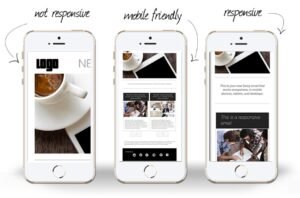
How to Optimize Emails for Mobile Users
Creating mobile-friendly emails improves user experience and increases the chances of conversions. Businesses should follow mobile optimization practices to ensure their messages look professional on every device.
1. Use Responsive Email Design
Responsive design allows emails to automatically adjust according to different screen sizes.
A responsive email should:
- Fit properly on smartphone screens
- Maintain readable text size
- Display images correctly
- Make navigation simple
Before sending an email campaign, businesses should test how it appears on:
- Smartphones
- Tablets
- Desktop computers
A well-designed email provides a consistent experience across all devices.
2. Keep Email Content Short and Clear
Mobile users usually scan emails quickly rather than reading every word.
Long paragraphs can make emails look overwhelming.
To improve readability:
- Use short sentences
- Break content into small sections
- Highlight important points
- Use clear headings
The goal is to communicate the message quickly and effectively.
3. Optimize Images
Images can improve email design, but they should be used carefully.
Best practices include:
- Compressing image sizes
- Using relevant visuals
- Adding alternative text
- Avoiding emails that contain only images
An email should still communicate the main message even if images do not load.
4. Create Mobile-Friendly CTAs
The main goal of most marketing emails is to encourage users to take action.
Whether the goal is purchasing a product, downloading a resource, or visiting a website, the CTA must be easy to use on mobile devices.
Effective mobile CTAs should be:
- Clear
- Short
- Visible
- Easy to tap
Examples:
❌ “Click Here”
✅ “Download Your Free Guide”
❌ “Buy”
✅ “Get Your Discount Today”
Benefits of Mobile Email Optimization
Optimizing emails for mobile users helps businesses achieve:
- Higher engagement rates
- Better customer experience
- Increased clicks
- More conversions
- Improved brand perception
Mobile optimization is no longer an optional feature; it is a necessary part of successful email marketing.
5. Weak CTAs (Call-to-Actions)
A strong call-to-action (CTA) guides subscribers toward the next step. It tells users what action they should take after reading an email.
However, many businesses create emails with unclear or weak CTAs, which results in missed sales opportunities.
A well-written email may educate customers and create interest, but without an effective CTA, users may not know what to do next.
Why CTAs Are Important in Email Marketing
The purpose of most marketing emails is to encourage a specific action, such as:
- Buying a product
- Booking a service
- Downloading content
- Registering for an event
- Visiting a website
- Contacting a business
The CTA acts as a bridge between customer interest and conversion.
Without a clear CTA, subscribers may read your email but take no action.
Common CTA Mistakes That Hurt Sales
1. Using Generic CTA Words
Many businesses use simple CTA phrases that do not create excitement.
Examples:
❌ Click Here
❌ Submit
❌ Learn More
These phrases do not explain the benefit.
Better alternatives:
✅ Get Your Free Guide
✅ Start Your Free Trial
✅ Claim Your Exclusive Offer
✅ Download the Checklist
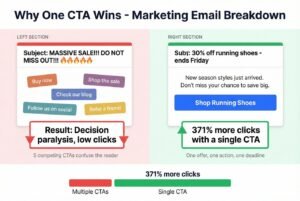
2. Having Too Many CTAs
Including too many actions in one email can confuse subscribers.
For example, an email asking users to:
- Buy a product
- Follow social media pages
- Read a blog
- Download a file
- Watch a video
creates too many choices.
This can reduce conversions because users do not know which action is most important.
A better approach is to focus on one primary CTA.
3. Making CTAs Difficult to Find
A CTA should be clearly visible.
Common mistakes include:
- Using small text links
- Placing CTAs at the end only
- Using colors that blend with the background
- Hiding important actions
A strong CTA should naturally stand out within the email.
4. Not Creating Urgency
Urgency encourages users to take action faster.
Examples:
- Offer ends tomorrow
- Limited spaces available
- Last chance to save
However, urgency should be used honestly.
Fake urgency can damage customer trust.
How to Create High-Converting CTAs
1. Focus on Benefits
Customers respond better when they understand what they will gain.
Weak:
“Buy Now”
Better:
“Get 30% Off Your First Order”
2. Use Action-Oriented Language
Strong CTAs usually begin with action words.
Examples:
- Get
- Start
- Download
- Discover
- Reserve
- Try
These words encourage immediate action.
No Personalization
Sending the same email to every subscriber is a common email marketing mistake that reduces engagement and conversions.
Customers prefer content that matches their interests and needs. Personalized emails make subscribers feel valued and increase the chances of interaction.
How to Improve Personalization
- Use subscriber names
- Recommend products based on interests
- Send relevant offers
- Customize content based on customer behavior
Personalized emails help businesses build stronger relationships and improve sales performance.
7. Poor Segmentation
Email segmentation means dividing subscribers into different groups based on their interests, behavior, or customer journey.
Sending the same message to everyone can make emails less relevant.
Benefits of Segmentation
- Higher engagement rates
- Better customer experience
- Improved conversions
- More targeted campaigns
Businesses can segment audiences based on location, purchase history, interests, and engagement level.
8. Not Tracking Results
Ignoring email analytics is another major mistake. Without tracking performance, businesses cannot understand what strategies are working.
Important metrics to monitor include:
- Open rate
- Click-through rate
- Conversion rate
- Bounce rate
- Unsubscribe rate
Regular analysis helps businesses improve future email campaigns.
Final Tips to Avoid Email Marketing Mistakes
To create successful email campaigns:
✔ Build an organic email list
✔ Write engaging subject lines
✔ Avoid sending too many emails
✔ Optimize emails for mobile users
✔ Use strong CTAs
✔ Personalize messages
✔ Segment subscribers
✔ Track campaign performance
Conclusion
Avoiding common email marketing mistakes helps businesses improve engagement, increase conversions, and build stronger customer relationships.
A successful email strategy focuses on delivering valuable content, understanding customer needs, and continuously improving campaigns through data analysis.
By following the right practices, businesses can turn email subscribers into loyal customers and achieve long-term growth.
Leave a Reply