


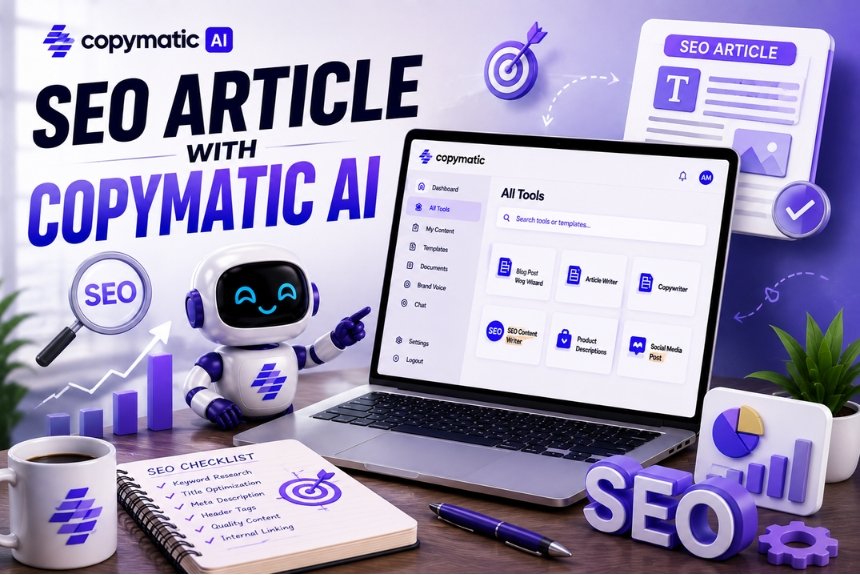
How to Create SEO-Optimized Articles Using Copymatic AI
Creating content that ranks on Google is no longer about simply inserting a few keywords into an article. Modern search engines evaluate content based on relevance, search intent, topical authority, user experience, expertise, and overall usefulness. As Google’s ranking systems continue to evolve, successful SEO content must provide genuine value while satisfying both readers and search engines.
For bloggers, affiliate marketers, SaaS companies, ecommerce brands, and digital marketing agencies, producing consistent, high-quality SEO content can be challenging. Researching keywords, creating outlines, writing comprehensive articles, optimizing headings, adding internal links, and improving readability require significant time and expertise.
This is where SEO Articles with Copymatic AI can streamline the content creation process.
Copymatic AI helps users generate structured drafts, blog outlines, marketing content, and long-form articles while supporting SEO best practices. Instead of starting from a blank page, marketers can use AI to accelerate brainstorming and drafting, allowing more time for research, editing, and strategic optimization.
However, publishing AI-generated content without refinement is rarely enough to achieve strong search visibility. High-performing articles are created by combining AI assistance with keyword research, content strategy, EEAT principles, and human expertise.
In this comprehensive guide, you’ll learn how to create SEO-friendly articles using Copymatic AI, from keyword research and content planning to on-page optimization, internal linking, meta tags, and final editing. Whether you’re new to SEO or looking to improve your existing workflow, this guide will help you build content that is informative, engaging, and optimized for long-term organic growth.
What Are SEO-Optimized Articles?
An SEO-optimized article is content specifically designed to satisfy user search intent while following search engine optimization best practices. Its goal is not only to rank in search results but also to provide valuable, accurate, and engaging information that encourages readers to stay on the page and take action.
Unlike traditional blog posts, SEO-focused articles are strategically planned around:
- Target keywords
- User search intent
- Logical heading structure
- Internal linking
- Meta optimization
- Readability
- Helpful content
- Topical authority
- EEAT principles
When these elements work together, search engines can better understand your content, and users are more likely to find it useful.
Why SEO Still Matters in 2026
Despite the rapid growth of AI-generated content and conversational search experiences, organic search remains one of the most reliable sources of long-term website traffic.
SEO offers several key advantages:
- Consistent organic traffic
- Higher visibility in search results
- Increased brand authority
- Lower long-term acquisition costs
- Sustainable lead generation
- Better user experience
- Stronger content discoverability
Unlike paid advertising, well-optimized content can continue attracting visitors long after it has been published.
Why Use Copymatic AI for SEO Content?
Copymatic AI is designed to speed up content creation by helping users generate ideas, outlines, and drafts. While AI cannot replace human expertise, it can significantly reduce the time required to create the first version of an article.
Some of the key benefits include:
- Faster content creation
- AI-powered brainstorming
- Blog outline generation
- Long-form article drafting
- SEO-friendly structure
- Headline suggestions
- Meta description ideas
- Content rewriting
- Marketing copy support
Used correctly, Copymatic AI becomes a productivity tool rather than a replacement for thoughtful writing and optimization.
Keyword Research Fundamentals
Keyword research is the foundation of every successful SEO strategy. Before writing any article, you need to understand what your audience is searching for and how they phrase their queries.
A good keyword strategy helps you:
- Discover relevant topics
- Understand audience needs
- Match search intent
- Build topical authority
- Increase organic visibility
- Create content that answers real questions
Without keyword research, even well-written content may struggle to attract search traffic.
Finding the Right Primary Keyword
Every SEO article should focus on one clear primary keyword.
For this guide, the target keyword is:
SEO Articles with Copymatic AI
This keyword should appear naturally in:
- SEO Title
- URL
- Meta Description
- H1 Heading
- Introduction
- One or more H2 headings
- Conclusion
- Image ALT text (where relevant)
Avoid overusing the keyword. Natural placement improves readability and aligns with modern SEO practices.
Secondary and Supporting Keywords
Supporting keywords help search engines understand the broader context of your content. They also allow you to rank for multiple related searches.
Examples include:
- AI SEO writing
- AI content generator
- SEO content creation
- Keyword research
- Long-form SEO articles
- AI blog writer
- SEO optimization
- On-page SEO
- Meta title optimization
- Content marketing
Using related terms naturally throughout your article strengthens topical relevance without resorting to keyword stuffing.
Understanding Search Intent
Search intent explains why someone performs a search.
Google prioritizes content that best satisfies the user’s intent.
The four primary intent types are:
Informational
The user wants to learn something.
Example:
How to create SEO articles
Navigational
The user wants to find a specific website or brand.
Example:
Copymatic AI login
Commercial Investigation
The user is comparing options before making a decision.
Example:
Best AI writing software
Transactional
The user is ready to purchase or sign up.
Example:
Buy AI writing software
For this article, the intent is clearly Informational, so the focus should be on education, practical guidance, and actionable insights rather than sales messaging.
Competitor Research
Before creating content, review the top-ranking pages for your target keyword.
Look for patterns such as:
- Common headings
- Frequently asked questions
- Content depth
- Media usage
- Internal linking
- Content freshness
- User engagement elements
Competitor research helps identify gaps and opportunities to create more comprehensive, helpful content.
Creating an SEO Content Strategy
Rather than publishing isolated blog posts, successful websites build clusters of related content around a central topic.
For example:
Pillar Page:
SEO Articles with Copymatic AI
Supporting Articles:
- Copymatic AI Tutorial
- AI Keyword Research Guide
- SEO Meta Title Best Practices
- Internal Linking Strategies
- Content Optimization Checklist
- On-Page SEO Guide
- AI Blogging Workflow
- EEAT Content Strategy
This interconnected approach strengthens topical authority and improves internal linking opportunities.
Creating an SEO Outline
A well-structured outline improves readability, keeps your writing focused, and helps search engines understand the hierarchy of your content.
Before generating text with Copymatic AI, create a clear outline based on your target keyword and search intent.
A strong outline typically includes:
H1
One primary page title.
H2
Major sections covering the main topic.
H3
Subtopics that expand each section.
H4 (Optional)
Additional details, examples, or step-by-step explanations.
Example Outline
H1
How to Create SEO-Optimized Articles Using Copymatic AI
H2
Keyword Research
H3
Finding Primary Keywords
H3
Supporting Keywords
H2
Content Planning
H3
Search Intent
H3
Competitor Analysis
H2
Article Writing
H3
Long-Form Content
H3
Heading Optimization
Content Planning Best Practices
Before generating any article, define:
- Target audience
- Primary keyword
- Search intent
- Desired article length
- Target reading level
- Brand voice
- Internal links
- External references
- Call-to-action
- Publishing goals
Having this information ready ensures AI-generated drafts are more relevant and require fewer revisions.
Writing Long-Form SEO Articles Using Copymatic AI
Long-form content continues to perform exceptionally well in search results because it provides comprehensive answers to user queries. While there is no perfect word count for every topic, articles between 2,000 and 4,000 words often rank well when they thoroughly address search intent and provide genuine value.
Copymatic AI helps streamline the drafting process by generating structured content that can be expanded, refined, and optimized. Rather than relying on AI to produce a publish-ready article, use it to create a strong first draft and then enhance it with original insights, examples, and expert recommendations.
A successful long-form article should:
- Fully satisfy search intent.
- Cover the topic in depth.
- Include logical heading structures.
- Use keywords naturally.
- Be easy to read and scan.
- Demonstrate expertise and trustworthiness.
- Encourage readers to continue exploring your website.
Step-by-Step Workflow for Writing SEO Articles
A structured workflow improves both productivity and content quality.
Step 1: Define Your Target Keyword
Every article should have one primary keyword supported by related semantic keywords.
Example:
Primary Keyword
SEO Articles with Copymatic AI
Step 2: Build Your Outline
Instead of generating the entire article immediately, create:
- H1
- H2 Sections
- H3 Subtopics
- FAQ Ideas
- CTA
A clear outline ensures logical organization and minimizes repetitive content.
Step 3: Generate Content Section by Section
Professional content creators rarely generate a complete article in one prompt.
Instead:
- Generate the introduction.
- Expand each H2 individually.
- Add examples.
- Improve transitions.
- Edit manually.
This approach results in higher-quality, more coherent content.
Step 4: Add Original Value
Search engines increasingly reward content that demonstrates real expertise and unique perspectives.
Enhance AI-generated drafts by including:
- Original examples
- Practical tips
- Industry insights
- Personal experiences (where appropriate)
- Updated information
- Relevant statistics (verified)
Optimizing Headings for SEO
A well-organized heading structure improves readability and helps search engines understand the hierarchy of your content.
H1
Use only one H1 per page.
Example:
How to Create SEO-Optimized Articles Using Copymatic AI
H2
Use H2 headings for major topics.
Examples:
- Keyword Research
- Content Planning
- Internal Linking
- EEAT
- Content Editing
H3
Use H3 headings to expand H2 sections.
Example:
Keyword Research
- Finding Primary Keywords
- Search Intent
- Supporting Keywords
Best Practices
- Keep headings descriptive.
- Include keywords naturally.
- Avoid overly long headings.
- Maintain a logical hierarchy.
Writing an Engaging Introduction
Your introduction should answer three questions quickly:
- What is this article about?
- Why does it matter?
- What will readers learn?
A compelling introduction encourages visitors to continue reading and reduces bounce rates.
Example Formula
Problem
Creating SEO content consistently takes time.
↓
Solution
Copymatic AI helps accelerate the writing process.
↓
Expectation
This guide explains how to combine AI with SEO best practices to produce high-quality articles.
Writing Valuable Body Content
The body of your article should deliver on the promise made in the introduction.
Each section should:
- Address one topic.
- Include actionable advice.
- Use examples where appropriate.
- Link naturally to related concepts.
- Transition smoothly to the next section.
Avoid filler content. Every paragraph should provide value.
Internal Linking Strategy
Internal links help users discover related content while assisting search engines in understanding your website structure.
Benefits include:
- Improved navigation
- Stronger topical authority
- Better crawlability
- Increased page views
- Longer session duration
Best Practices
- Link to relevant articles.
- Use descriptive anchor text.
- Avoid excessive linking.
- Prioritize high-value pages.
- Update older articles with links to newer content.
Example:
Instead of:
Click here.
Use:
Learn more in our Copymatic AI Tutorial for Beginners.
External Linking Best Practices
External links can strengthen credibility when they point to trustworthy and relevant resources.
Link to:
- Official documentation
- Industry research
- Government resources
- Academic publications
- Recognized authorities
Avoid linking to low-quality or unrelated websites.
Image SEO Optimization
Images contribute to both user experience and search visibility when properly optimized.
Use Descriptive Filenames
Instead of:
image1.jpg
Use:
copymatic-seo-content-editor.webp
Add ALT Text
Example:
AI-powered SEO article editor using Copymatic AI
Compress Images
Large image files can slow page loading times.
Use modern formats such as:
- WebP
- AVIF
Match Images to Content
Every image should support the surrounding section rather than serving as decoration.
Meta Titles
The meta title is often the first thing users see in search results.
Best Practices
- Keep it between 50–60 characters.
- Include the primary keyword.
- Make it compelling.
- Avoid keyword stuffing.
Example:
How to Create SEO-Optimized Articles Using Copymatic AI
Meta Descriptions
Although meta descriptions are not a direct ranking factor, they can influence click-through rates.
Best Practices
- 140–160 characters
- Summarize the page
- Include the primary keyword naturally
- Encourage clicks
Example:
Learn how to create SEO-optimized articles using Copymatic AI with keyword research, outlines, EEAT, and on-page optimization tips.
URL Optimization
Short, descriptive URLs are easier for users and search engines to understand.
Good:
yourdomain.com/seo-articles-with-copymatic-ai
Poor:
yourdomain.com/post?id=27483&category=blog
EEAT Best Practices
Google values content that demonstrates:
Experience
Share practical examples and workflows.
Expertise
Provide accurate, in-depth explanations.
Authoritativeness
Cover topics comprehensively and reference reputable sources when needed.
Trustworthiness
Keep information accurate, transparent, and up to date.
AI can assist with drafting, but human review is essential for meeting EEAT expectations.
AI Prompt Templates for Better SEO Articles
Keyword Research Prompt
Generate a list of primary, secondary, LSI, NLP, and long-tail keywords for the topic “SEO Articles with Copymatic AI.” Organize them by search intent and relevance.
SEO Outline Prompt
Create a detailed SEO-friendly outline for a long-form informational article targeting the keyword “SEO Articles with Copymatic AI.” Include H1, H2, H3 headings, FAQs, and a conclusion.
Long-Form Content Prompt
Write a comprehensive section explaining keyword research for SEO content. Use a professional tone, include practical examples, and maintain clear readability.
Meta Description Prompt
Write five compelling meta descriptions (under 160 characters) that naturally include the keyword “SEO Articles with Copymatic AI.”
Internal Linking Prompt
Suggest relevant internal linking opportunities for an article about SEO content creation using AI. Include descriptive anchor text ideas.
Real SEO Article Workflow Example
| Stage | Task | Copymatic AI Role |
| Research | Identify keywords | Generate topic ideas and keyword-based drafts |
| Planning | Build outline | Create H1–H3 structure |
| Writing | Draft article | Generate section-by-section content |
| Optimization | Improve SEO | Suggest keywords and improve readability |
| Editing | Human review | Refine tone, verify facts, add insights |
| Publishing | Final checks | Export polished content for CMS |
Content Editing Checklist
Writing an SEO article is only half the process. The final editing stage often determines whether your content performs well in search engines or gets overlooked. AI-generated drafts can save significant time, but they should always be reviewed for accuracy, clarity, and originality before publication.
Use the following checklist before publishing every article.
1. Verify Facts and Information
Artificial intelligence can occasionally produce outdated or inaccurate information. Always verify:
- Product features
- Statistics
- Dates
- Pricing
- Technical claims
- Industry terminology
Whenever possible, cross-check information using official documentation or trusted industry sources.
2. Improve Readability
SEO content should be easy to scan.
Best practices include:
- Short paragraphs (2–4 lines)
- Bullet points
- Numbered lists
- Clear H2 and H3 headings
- Tables where appropriate
- White space between sections
Readable content improves user engagement and reduces bounce rates.
3. Strengthen Keyword Placement
Review your keyword usage.
Ensure your primary keyword appears naturally in:
- SEO Title
- URL
- Meta Description
- H1
- First 100 words
- At least one H2
- Conclusion
- Image ALT text (where relevant)
Also include semantic keywords naturally throughout the article.
4. Optimize Internal Links
Before publishing, link to related content across your website.
Example internal links:
- Copymatic AI Tutorial for Beginners
- Copymatic AI Copywriting Guide
- Copymatic AI for Agencies
- AI Blogging Guide
- On-Page SEO Checklist
A strong internal linking strategy improves navigation and strengthens topical authority.
5. Check User Experience
Ask yourself:
- Is the article easy to read?
- Does each section answer a question?
- Are examples included?
- Is the CTA clear?
- Would you bookmark this article?
Great SEO content always prioritizes the reader first.
Common SEO Mistakes to Avoid
Even experienced content creators can make optimization mistakes that affect rankings. Here are some of the most common issues—and how to avoid them.
1. Keyword Stuffing
Overusing your target keyword can make content difficult to read and may negatively affect user experience.
❌ Incorrect:
SEO Articles with Copymatic AI are the best SEO Articles with Copymatic AI…
✅ Better:
Use the primary keyword naturally while incorporating supporting and semantic keywords.
2. Ignoring Search Intent
Ranking is difficult if your content doesn’t match what users expect.
For informational searches:
- Educate
- Explain
- Demonstrate
- Provide actionable advice
Avoid turning informational articles into sales pages.
3. Thin Content
Articles that lack depth often struggle to rank.
Instead of writing 700 generic words, create comprehensive content that thoroughly answers the topic.
4. Poor Heading Structure
Avoid random headings.
Follow:
- One H1
- Multiple H2s
- Relevant H3s
- Logical hierarchy
5. Missing Internal Links
Every new article should connect to existing related content.
This helps:
- Users
- Search engines
- Crawlability
- Topical authority
6. Duplicate Content
Avoid copying content from competitors or publishing nearly identical AI-generated articles across multiple pages.
Always personalize, expand, and improve AI drafts.
7. Forgetting Meta Information
A missing or poorly written meta title and description can reduce click-through rates, even if your article ranks well.
Frequently Asked Questions (FAQs)
1. Can Copymatic AI write SEO-friendly articles?
Yes. Copymatic AI can generate structured drafts, blog outlines, and long-form content. However, human editing is essential to ensure factual accuracy, originality, and alignment with search intent.
2. Is AI-generated content good for SEO?
AI-generated content can perform well when it is helpful, well-researched, and edited by humans. Search engines prioritize quality and usefulness rather than whether content was created with AI assistance.
3. How long should an SEO article be?
There is no universal word count. Focus on covering the topic comprehensively. Many competitive informational articles range from 2,000 to 4,000+ words, depending on the subject.
4. How many keywords should I target?
Use one primary keyword supported by relevant secondary, semantic, NLP, and long-tail keywords. Prioritize natural language over keyword density.
5. Does Copymatic AI perform keyword research?
Copymatic AI can help generate content ideas and drafts, but dedicated SEO tools are still recommended for in-depth keyword research and competitive analysis.
6. What is search intent?
Search intent is the reason behind a user’s search query. Common intent categories include informational, navigational, commercial investigation, and transactional.
7. Why are internal links important?
Internal links improve navigation, distribute page authority, help search engines understand your site’s structure, and encourage visitors to explore more content.
8. What is EEAT?
EEAT stands for:
- Experience
- Expertise
- Authoritativeness
- Trustworthiness
These principles help search engines evaluate content quality and reliability.
9. Should I publish AI content without editing?
No. Always review AI-generated content for accuracy, tone, readability, originality, and SEO optimization before publishing.
10. How often should SEO articles be updated?
Review and refresh important articles every 6–12 months or sooner if significant industry changes occur. Updating content helps maintain relevance and can improve long-term performance.
11. Can Copymatic AI help with meta titles and descriptions?
Yes. It can generate multiple meta title and description variations, which you can refine to match your target keyword and improve click-through rates.
12. What is the biggest SEO mistake beginners make?
Many beginners focus on keywords instead of user intent. Successful SEO starts with understanding the audience and creating content that genuinely answers their questions.
Final SEO Checklist
Before clicking “Publish,” confirm that you have completed the following:
Keyword Optimization
- Primary keyword included naturally
- Secondary keywords added
- NLP keywords integrated
- No keyword stuffing
Content Quality
- Search intent satisfied
- Helpful, original information
- Logical structure
- Accurate facts
- Strong examples
On-Page SEO
- SEO Title optimized
- Meta Description completed
- URL optimized
- Headings structured correctly
- Images compressed
- ALT text added
User Experience
- Easy-to-read formatting
- Mobile-friendly layout
- Fast-loading images
- Internal links included
- Clear CTA
Final Review
- Grammar checked
- Spelling checked
- Links tested
- Readability improved
- Published in WordPress
Expert Verdict
Copymatic AI is an effective productivity tool for creating SEO-focused content when used strategically. It simplifies outlining, drafting, and idea generation, allowing content creators to spend more time on research, optimization, and quality improvements.
It is particularly useful for:
- Bloggers
- Digital Marketing Agencies
- SEO Professionals
- SaaS Companies
- Ecommerce Stores
- Affiliate Marketers
- Small Business Owners
However, long-term SEO success depends on combining AI assistance with human expertise, thorough keyword research, strong editing, and a commitment to producing genuinely helpful content.
Overall Expert Rating: ⭐⭐⭐⭐☆ (4.9/5)
Ready to create SEO-friendly content more efficiently?
Start by researching the right keywords, building a structured outline, and using Copymatic AI to generate a high-quality first draft. Refine your content with human insights, optimize it for search intent, and publish articles that provide real value to your audience. Consistent quality and thoughtful optimization are the foundation of sustainable organic growth.
Conclusion
Creating SEO-optimized articles is no longer just about adding keywords—it requires understanding user intent, planning content strategically, and delivering meaningful value. Throughout this guide, we’ve covered every stage of the SEO content creation process, from keyword research and outlining to long-form writing, heading optimization, internal linking, EEAT principles, and final editing.
Copymatic AI can dramatically improve productivity by accelerating brainstorming and first-draft creation, but it works best when paired with human expertise. By combining AI efficiency with thoughtful research, accurate information, and user-focused optimization, you can produce content that not only ranks in search engines but also builds trust and authority with your audience.
Focus on creating content that answers real questions, solves genuine problems, and evolves alongside search engine best practices. When quality remains your priority, SEO becomes a sustainable strategy for long-term organic growth.
Leave a Reply